
A solar panel junction box is the sealed electrical housing on the back of each panel where the photovoltaic cells connect to the wiring system. Solar panel junction box repair in Dorset is rarely a straightforward fix. Junction boxes carry high DC voltages, and any manual intervention risks fire and electric shock. The industry standard in 2026 is replacement, not repair. This guide explains why, what professionals do instead, and how Dorset homeowners can protect their systems before a fault becomes a costly failure.
Why DIY solar panel junction box repair in dorset is unsafe
Junction boxes are sealed, non-serviceable units by design. Opening one without specialist training and equipment puts you at immediate risk of serious injury.
The core problem is voltage. Solar panels generate high DC current even on overcast days, and the junction box sits directly in that circuit. Defective solder contacts and diode failures inside the box cannot be detected by eye. You cannot see the fault, and you cannot safely access it without thermal imaging or electroluminescence testing.
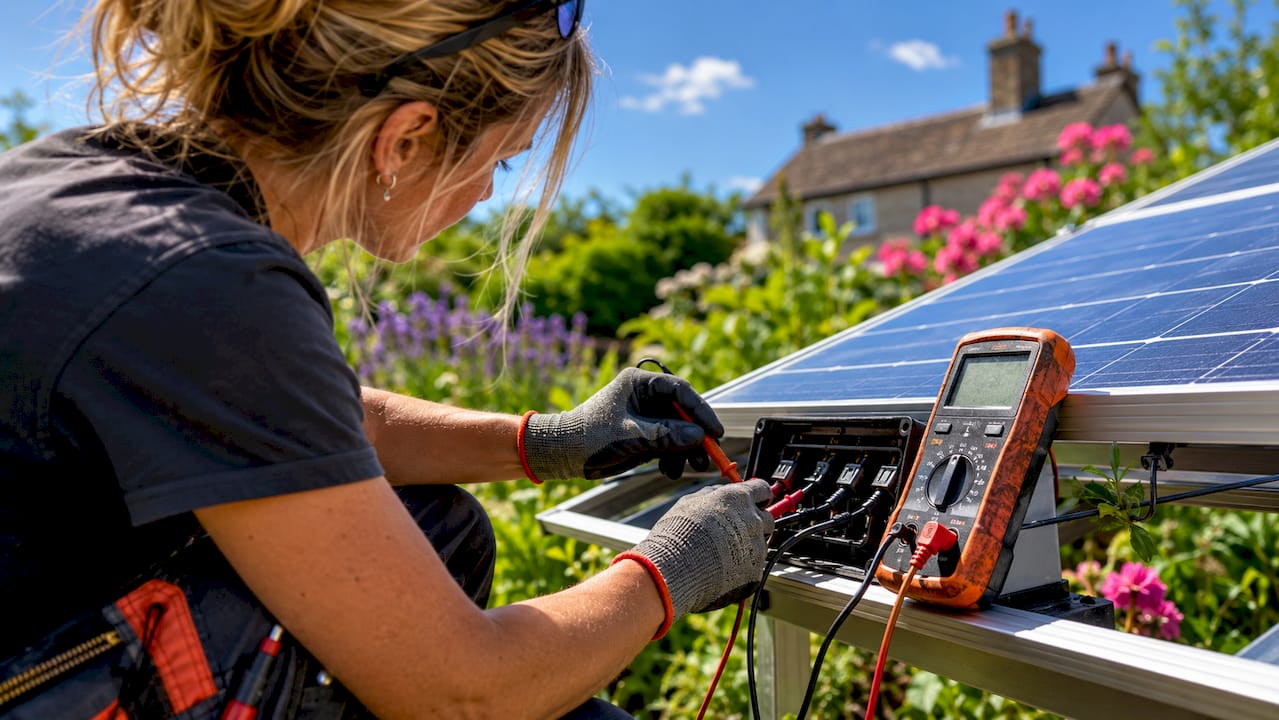
There is also a sealing problem that catches many homeowners out. Repairing or opening a sealed junction box compromises the potting compound inside. Once that compound is disturbed, it is nearly impossible to restore the original waterproof standard. Electricians who reseal with generic silicone create moisture paths that cause terminal corrosion within 12–18 months. The repair appears to work, then fails quietly over the following year.
Beyond safety, DIY attempts typically void your panel warranty and your installer’s workmanship guarantee. Most manufacturers specify that the junction box must only be accessed by a qualified electrician using approved components.
- Opening a junction box without isolating the array first risks lethal DC shock
- Generic sealants do not match the original potting compound specification
- Moisture ingress after improper resealing causes corrosion within 12–18 months
- Warranty voidance leaves you liable for the full cost of panel replacement
- Homeowners often mistake wiring faults for junction box failures, leading to misdiagnosis during self-repair
Pro Tip: If you notice a burnt smell near your panels or a sudden drop in output on your inverter app, do not climb onto the roof. Switch off the system at the isolator and call a qualified solar electrician immediately.
How do professionals diagnose junction box faults?
Professional diagnosis goes well beyond a visual check. Qualified engineers use specialist equipment to find faults that are invisible from the outside.
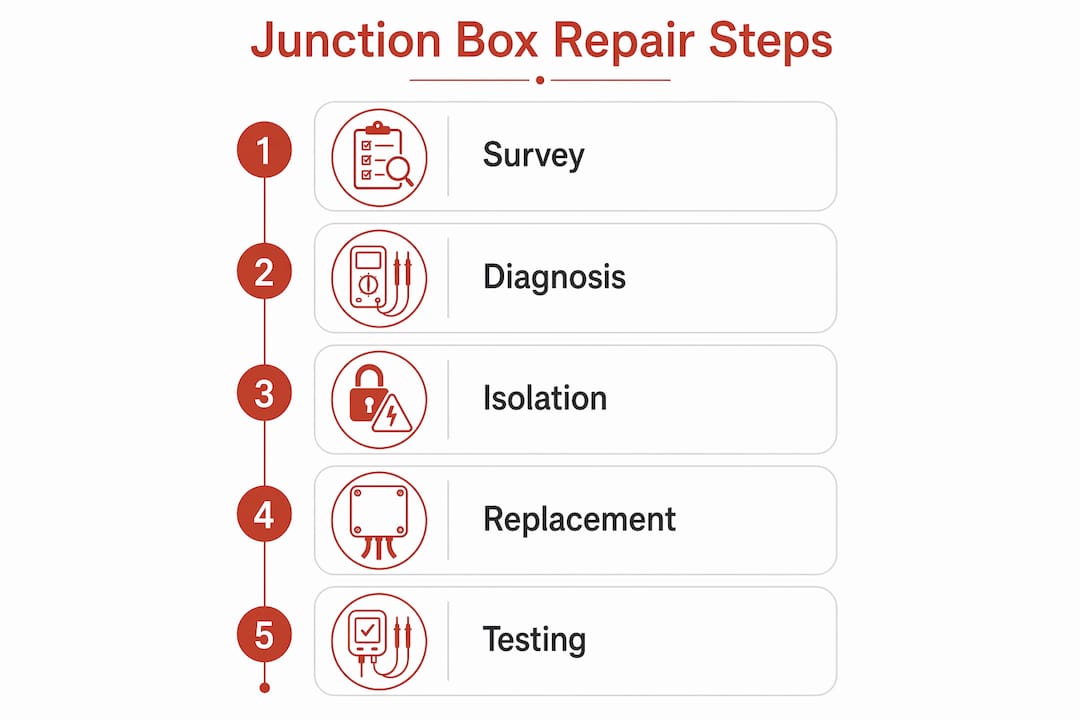
The standard diagnostic process for Dorset solar repair services follows a clear sequence:
- Inverter data review. Engineers pull performance logs from your inverter, whether that is a SolarEdge, SMA, or GivEnergy unit, to identify which string or panel is underperforming.
- Visual inspection. Technicians look for physical signs including discolouration, melting, cracked casings, and burn marks around the junction box area.
- Thermal imaging scan. Professional maintenance teams use thermal imaging to detect hotspots before visible failures occur. A faulty diode or poor solder joint shows as a heat anomaly on the scan.
- Electroluminescence testing. For suspected internal defects, some engineers use electroluminescence imaging, which passes a small current through the panel and photographs the light emitted. This reveals micro-cracks and solder failures invisible to thermal cameras.
- Replacement recommendation. Once the fault is confirmed, the engineer specifies whether the junction box alone can be replaced or whether the full panel requires swapping out.
Local Dorset firms, including Up Top Solar and JME Energy, offer free feasibility surveys and one-hour callback guarantees, which makes early professional contact straightforward. The cost of a diagnostic visit is almost always less than the cost of a failed DIY attempt that damages surrounding components.
A failed junction box does not just affect one panel. A faulty junction box drags down the performance of the entire string due to resistive losses. One compromised unit can reduce output across six or more panels simultaneously.
Pro Tip: Check your inverter app daily. A consistent 10–15% drop in output from a specific string, with no change in weather, is one of the clearest early warning signs of a junction box fault.
What should dorset homeowners do if they suspect a fault?
Acting quickly limits the damage. Here is a clear sequence to follow if you suspect a junction box problem.
Immediate steps:
- Switch off the solar system at the AC isolator inside your property
- Do not attempt to access the roof or touch any panel components
- Note the time the fault appeared and any symptoms such as smell, visible damage, or output drop
- Take a screenshot of your inverter app showing the performance data
Preparing for a professional visit:
Give the engineer as much information as possible before they arrive. Know your panel make and model, your inverter brand, and the date of your original solar panel installation in Dorset. If you have a monitoring system such as GivEnergy or SolarEdge, share your login credentials so the engineer can review historical data remotely before attending.
What professionals do on site:
A qualified engineer will isolate the array safely, carry out thermal imaging, confirm the fault location, and advise on replacement. In most cases, a like-for-like junction box replacement or a full panel swap is completed in a single visit. The engineer will also check surrounding panels for secondary damage caused by the resistive losses from the failed unit.
| Factor | DIY Repair Attempt | Professional Replacement |
|---|---|---|
| Safety | High risk of electric shock and fire | Fully isolated and safe |
| Sealing quality | Generic silicone, fails within 12–18 months | Manufacturer-grade potting compound |
| Warranty status | Voided immediately | Maintained or restored |
| Fault detection | Visual only, misses internal defects | Thermal imaging and data analysis |
| Long-term outcome | Likely repeat failure | Reliable, tested result |
For Dorset homeowners with coastal exposure, salt-laden air accelerates corrosion inside any compromised junction box. This makes professional-grade sealing even more critical than it is for inland properties.
How can you prevent junction box failure in dorset?
Annual professional solar inspections and consistent panel cleaning are the most reliable ways to prevent junction box problems before they develop. Prevention costs a fraction of replacement.
The most common causes of junction box failure are moisture ingress, overheating from shading, and physical damage from debris. All three are manageable with the right maintenance routine.
Practical maintenance steps for Dorset homeowners:
- Book an annual solar service with a qualified local engineer to catch early faults
- Clean panels twice a year using a soft brush and clean water, or hire a professional cleaning service
- Trim trees and hedges that cast shade on panels, as shading causes localised overheating that stresses junction boxes
- Check your inverter app weekly and log any unexplained output drops
- Inspect cable runs visually from ground level after storms for signs of physical damage
Annual service contracts offered by Dorset solar repair services typically include thermal imaging, performance data review, and a written report. That report is also useful evidence if you ever need to make a warranty claim. Smarthometechnical offers service contract options that cover ongoing maintenance for solar systems across Dorset.
Pro Tip: Fit a monitoring system if you do not already have one. GivEnergy and SolarEdge both offer real-time string-level monitoring that flags performance drops the moment they occur, giving you days or weeks of warning before a junction box fault becomes a full failure.
Key takeaways
Solar panel junction box faults require professional diagnosis and replacement, not DIY repair, because the risks to safety, sealing integrity, and warranty status are too significant to ignore.
| Point | Details |
|---|---|
| Junction boxes are non-serviceable | Opening a sealed unit compromises waterproofing and voids manufacturer warranties. |
| DIY resealing fails within 12–18 months | Generic silicone creates moisture paths that cause terminal corrosion over time. |
| Thermal imaging is the diagnostic standard | Professionals use thermal scans to find hotspots invisible to the naked eye. |
| One failed box affects the whole string | Resistive losses from a single fault reduce output across multiple panels simultaneously. |
| Annual inspections prevent most failures | Regular professional servicing catches faults before they become costly replacements. |
What i have learned from junction box faults in dorset
The most common misconception I encounter is that a junction box fault is a minor electrical problem, similar to replacing a fuse. It is not. The sealed nature of the unit, combined with the live DC voltage present even when the inverter is switched off, makes it one of the more hazardous components on a domestic solar system.
What surprises homeowners most is how often the junction box is not actually the root cause. Wiring faults, corroded MC4 connectors, and inverter string errors all produce symptoms that look identical to a junction box failure from the outside. Misdiagnosis is genuinely common, and it is one reason why I would never recommend self-diagnosis beyond checking your inverter app. The complexity of internal fault detection means that even experienced electricians without the right thermal equipment can miss the actual fault location.
Early intervention is where homeowners consistently save money. A junction box fault caught at the thermal imaging stage, before it causes resistive losses across the string, typically costs a fraction of what a delayed repair costs once secondary panel damage has occurred. The efficiency losses from a failed unit compound over weeks and months, quietly reducing your return on the system.
My advice for any Dorset homeowner is to choose a local solar electrician who carries thermal imaging equipment as standard, not as an optional extra. Ask to see the thermal report after every inspection. That report tells you the true condition of your system, not just what the engineer observed visually on the day.
— Simon
Get professional solar support from Smarthometechnical
If you have noticed a drop in output, a burnt smell near your panels, or an error on your inverter display, the right next step is a professional diagnostic visit, not a roof inspection on your own.

Smarthometechnical specialises in solar panel installation and repair across Dorset, including junction box diagnostics, thermal imaging surveys, and full component replacement. The team uses professional-grade equipment to identify faults accurately and resolve them safely, with no guesswork and no risk to your warranty. Contact Smarthometechnical today to book a diagnostic visit and get your system performing at full capacity again.
FAQ
What does a solar panel junction box actually do?
A solar panel junction box connects the photovoltaic cells inside the panel to the external wiring system. It also houses bypass diodes that protect the panel from overheating when shading occurs.
Can a solar panel junction box be repaired rather than replaced?
The industry standard is replacement, not repair. Opening a sealed junction box compromises the potting compound, and resealing with generic materials leads to moisture ingress and corrosion within 12–18 months.
How do i know if my junction box is faulty?
Common signs include a sudden drop in output on your inverter app, a burnt smell near the panels, visible discolouration or melting on the panel back, and persistent underperformance from one string.
Is it safe to keep using my solar system if i suspect a junction box fault?
Switch the system off at the AC isolator and contact a qualified solar electrician before using it again. A faulty junction box carries a fire risk and can cause further damage to connected panels.
How much does professional junction box replacement cost in dorset?
Costs vary depending on panel access, panel make, and whether a full panel replacement is needed. Most Dorset solar repair services offer a free initial assessment or feasibility survey to confirm the fault before quoting.
