
Solar panel installation is the process of mounting photovoltaic (PV) panels to a property to generate electricity from sunlight, reducing energy bills, cutting carbon emissions, and increasing property value. For homeowners and developers across southern England, the solar panel installation process in 2026 is more financially attractive than ever. The UK government’s 0% VAT on residential solar systems, combined with Smart Export Guarantee (SEG) payments, means the numbers stack up convincingly. A typical 4kWp system can save £600 to £1,400 annually depending on whether you add battery storage. This guide covers every stage of the process, from your first consultation through to commissioning.
What does the solar panel installation process involve?
Solar panel installation follows a structured sequence of steps, and understanding each one helps you set realistic expectations and ask the right questions of any installer.
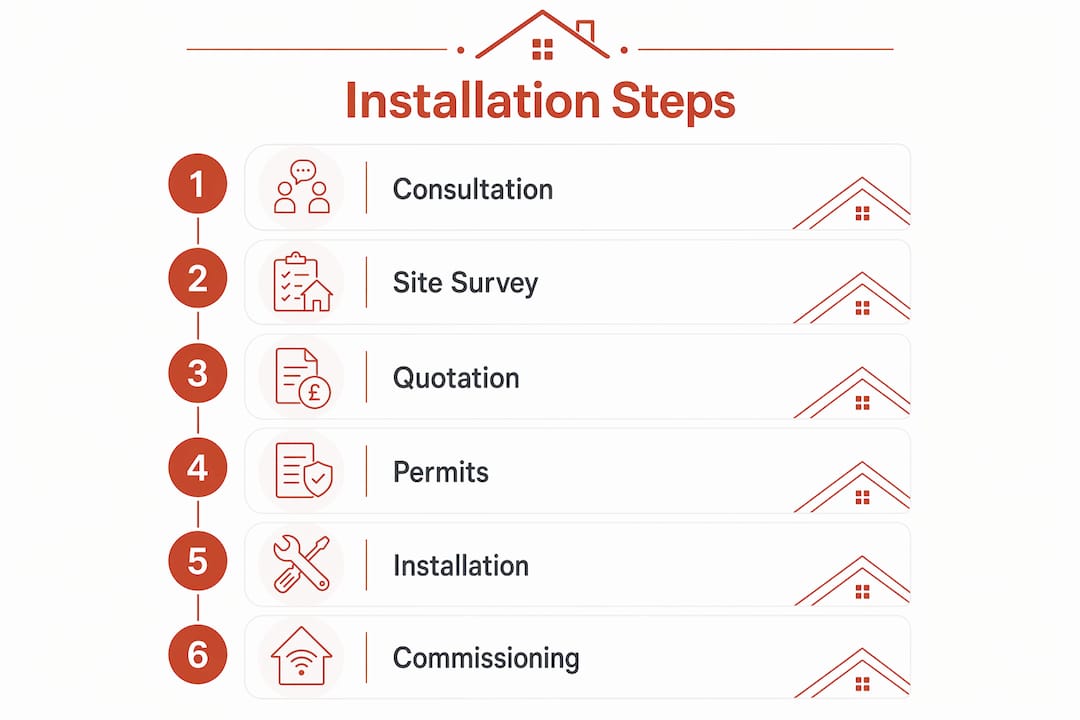
1. Initial consultation
A credible installer begins with a 10 to 30 minute consultation to understand your energy usage, roof type, and property orientation. This is where system size and design are tailored to your specific situation. Any installer offering a fixed price before this conversation has not done the work properly.
2. Site assessment and technical survey
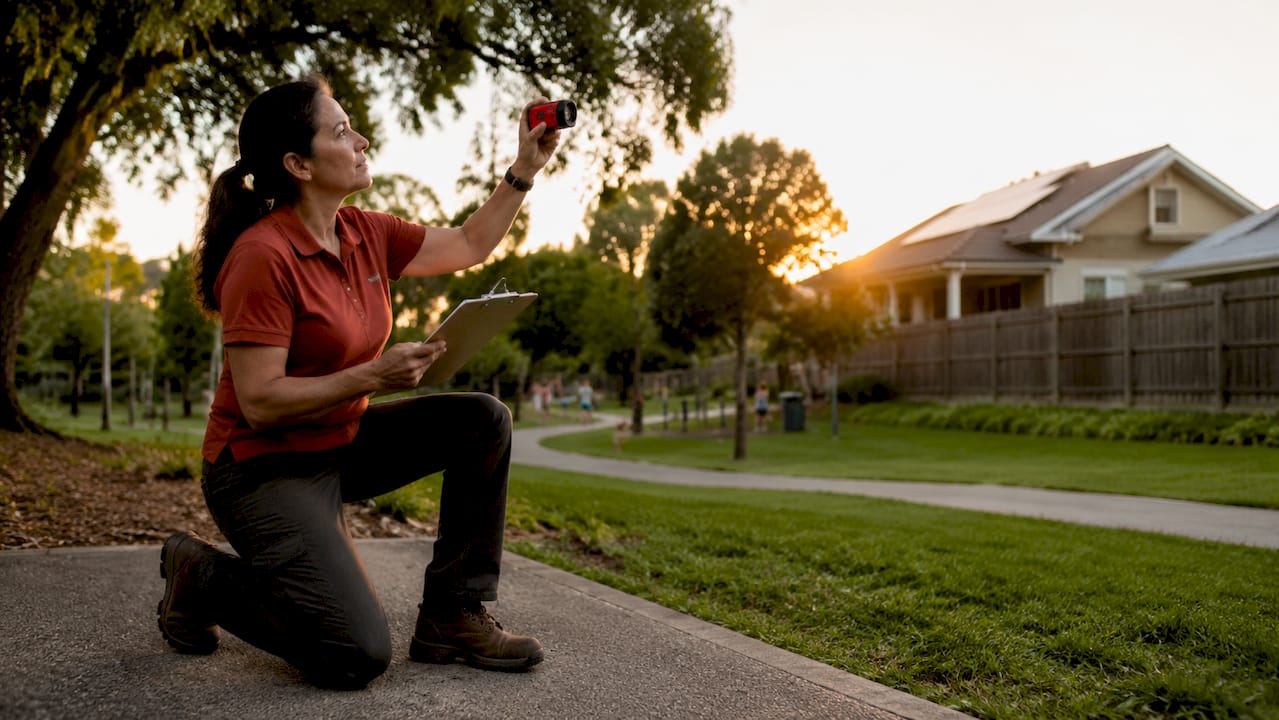
A thorough site assessment takes one to two hours and covers roof load capacity, shading from trees or neighbouring buildings, and structural integrity. Many installers also use satellite imagery for an initial remote evaluation before visiting in person. Skipping or rushing this stage is one of the most common causes of underperforming systems.
3. Customised quotation
After the survey, you receive a formal quote detailing panel count, inverter specification, estimated annual output, and projected savings. A well-structured quote also outlines warranty terms and the payment schedule.
4. Permits, paperwork, and grid approvals
This is where most of the waiting happens. Compliance with electrical and structural regulations, including Distribution Network Operator (DNO) approval, is a legal requirement. Larger systems above 3.68kW typically require a G99 application to the DNO before connection is permitted. This approval process alone can take several weeks.
5. Physical installation
On-site work typically spans one to two days for a standard domestic system. The sequence runs: scaffolding erection, roof bracket and rail mounting, panel placement and securing, DC wiring from panels to inverter, inverter installation (usually in a garage or utility room), AC connection to the consumer unit, and fitting of safety devices including rapid shutdown switches. Proper labelled DC wiring with UV-resistant conduit reduces fire risk and improves long-term reliability.
6. Commissioning and monitoring setup
Once wired and connected, the system is tested and commissioned. Your installer will configure a monitoring app, typically via the inverter manufacturer’s platform such as SolarEdge, Solis, or GivEnergy, so you can track daily output and consumption in real time.
Pro Tip: Ask your installer to walk you through the monitoring app before they leave site. Understanding your system’s daily output pattern helps you shift energy-heavy tasks like dishwashers and washing machines to peak generation hours, maximising self-consumption.
The full process from consultation to commissioning typically spans one to three months, even though the physical installation takes only one to two days. Paperwork and grid connection approvals account for most of that time.
How do solar panel systems work and what are the key components?
A solar PV system converts sunlight into usable electricity through a chain of components, each with a specific role. Understanding what each part does helps you evaluate quotes and spot any gaps in a proposed design.
Core system components:
- Solar panels: Photovoltaic cells within each panel convert sunlight into direct current (DC) electricity. Panel efficiency ratings above 20% are worth prioritising, particularly for southern England roofs where space may be limited or partial shading is a factor. Higher-efficiency panels produce more power per square metre, reducing the number of panels needed.
- Inverter: Converts DC electricity from the panels into alternating current (AC) used by your home appliances. String inverters are the most common and cost-effective option; microinverters are fitted per panel and perform better under shading conditions.
- Mounting system: Rails and brackets fixed to the roof structure. The mounting system must be compatible with your roof type, whether that is concrete tile, slate, or flat felt, and must not compromise weatherproofing.
- Wiring and safety devices: DC isolators, AC isolators, and rapid shutdown devices are required under UK electrical regulations. These allow the system to be safely isolated by emergency services if needed.
- Battery storage (optional): A home battery such as a GivEnergy or Tesla Powerwall stores surplus daytime generation for use in the evening. Battery storage is what pushes annual savings from the £600 to £900 range up to £1,000 to £1,400 when combined with time-of-use tariffs. You can read real examples of solar battery savings to see how this plays out in practice.
String inverter vs microinverter: a quick comparison
| Feature | String inverter | Microinverter |
|---|---|---|
| Cost | Lower upfront cost | Higher upfront cost |
| Performance under shading | Reduced output if one panel is shaded | Each panel operates independently |
| Monitoring | System-level data | Panel-level data |
| Best suited for | Unshaded, south-facing roofs | Roofs with partial shading or mixed orientations |
One important note on panel specifications: panels rated at Standard Test Conditions rarely reach their full rated output in UK weather. Realistic design calculations should apply a derate factor of 0.75 to 0.85 to account for temperature variation and lower irradiance. Any installer presenting output estimates based purely on nameplate ratings is overstating what you will actually generate.
What are the financial and environmental benefits of installing solar panels?
The financial case for solar in southern England is well-supported by current incentives and energy prices.
A typical 4kWp system saves £600 to £900 annually without battery storage, rising to £1,000 to £1,400 with a battery on a time-of-use tariff. Those savings come from two sources: reduced grid consumption during daylight hours, and SEG export payments of 5p to 15p per kWh for surplus electricity sent back to the grid. Southern England’s higher annual irradiance compared to northern regions means systems here consistently outperform national averages.
The 0% VAT on residential solar installations saves homeowners £1,000 to £1,400 compared to the previous 20% rate. Combined with typical payback periods of six to eight years and a system lifespan of 25 to 30 years, the return on investment is substantial.
“Solar installations can raise UK home values by 0.9% to 4.1%, making them one of the few home improvements that directly increases resale price while reducing running costs.”
On the environmental side, a standard domestic system offsets 0.7 to 1 tonne of CO2 annually, totalling 17 to 25 tonnes over its lifetime. Modern silicon panels have a carbon payback period of just one to three years, meaning the system is carbon-positive for the vast majority of its operational life. For property developers in southern England, this is increasingly relevant as buyers factor energy performance into purchasing decisions.
Industry-standard warranties cover 25 years for both product and performance. Any warranty shorter than this should be treated as a red flag when comparing quotes.
What should you consider before committing to installation?
Getting the right system starts well before any panels go on the roof. These are the factors that most directly affect whether your installation performs as expected.
Roof suitability:
South-facing roofs at a pitch of 30 to 40 degrees deliver optimal output in the UK. East or west-facing roofs are workable and still financially viable, but output drops by roughly 15 to 20%. Flat roofs can accommodate angled mounting frames. Shading from chimneys, dormer windows, or nearby trees between 9am and 3pm has a disproportionate impact on generation and must be assessed carefully. For those in coastal areas, solar panel performance in coastal conditions involves additional considerations around salt air and panel durability.
Planning permission:
Most domestic solar installations in England fall under permitted development rights and do not require planning permission. Exceptions include listed buildings, properties in conservation areas, and systems that project more than 200mm from the roof surface. Your installer should confirm your permitted development status before work begins.
Choosing the right installer:
- Verify Microgeneration Certification Scheme (MCS) accreditation. MCS certification is required to access SEG payments.
- Ask for a detailed written quote, not a ballpark figure over the phone.
- Request references from installations completed in the last 12 months.
- Confirm warranty terms cover both the panels and the workmanship.
- Ask how the system design accounts for your specific roof orientation and any shading.
Pro Tip: Request the installer’s MCS certificate number and verify it independently on the MCS website before signing any contract. This takes two minutes and confirms both their accreditation status and whether any complaints have been logged.
Maintenance requirements for solar PV are low. Panels are largely self-cleaning in the UK’s rainfall patterns, though an annual inspection is advisable. A solar system annual service checks inverter performance, connection integrity, and panel condition, catching any degradation before it affects output.
Key takeaways
A well-designed solar PV system in southern England pays back its cost within six to eight years, generates clean electricity for 25 to 30 years, and increases property value while qualifying for 0% VAT and Smart Export Guarantee payments.
| Point | Details |
|---|---|
| Installation timeline | Physical work takes one to two days; the full process including approvals spans one to three months. |
| Financial returns | A 4kWp system saves £600 to £1,400 annually depending on battery use and tariff choice. |
| VAT and incentives | 0% VAT saves £1,000 to £1,400 upfront; SEG pays 5p to 15p per kWh for exported electricity. |
| Warranty benchmark | Insist on 25-year product and performance warranties. Anything shorter indicates lower-quality equipment. |
| Installer verification | MCS accreditation is mandatory for SEG access. Confirm it independently before signing any contract. |
What I have learned from solar installations in southern England
After working on solar installations across Hampshire, Dorset, and Surrey, the pattern I see most often is not technical. It is a mismatch between what homeowners expect and what they were told before the work started.
The installers who generate the most complaints are not necessarily the ones who do poor physical work. They are the ones who underestimate timelines, gloss over the paperwork stage, and hand over a system without explaining how to use it. A homeowner who does not understand their monitoring app will not adjust their energy habits, and that means they capture far less value from the system than they should.
My honest view is that the consultation stage is where you learn everything you need to know about an installer’s quality. If they are thorough, ask detailed questions about your energy use, and explain their design rationale clearly, the installation itself will almost certainly go well. If they are vague, rush through the survey, or cannot explain why they have chosen a particular inverter, walk away regardless of the price.
Southern England is genuinely well-suited to solar. The irradiance levels here are among the highest in the UK, and with current energy prices and the 0% VAT position, the financial case is as strong as it has ever been. The technology is mature, the warranties are long, and the returns are predictable. What varies is installer quality, and that is where your due diligence matters most.
For developers, I would add one further point. Solar is no longer a nice-to-have on new builds and refurbishments. Buyers in this region are actively factoring energy performance into offers, and a well-documented solar installation with a strong warranty is a genuine selling point, not just a green credential.
— Simon
Ready to explore solar installation for your property?
Smarthometechnical specialises in solar panel installation across southern England, working with homeowners and property developers to design and install systems that are sized correctly, compliant with UK regulations, and built to last. Every project starts with a thorough consultation and site assessment, and every installation is MCS-certified, giving you full access to Smart Export Guarantee payments and the current 0% VAT benefit.
Whether you are installing on a family home, a rental portfolio, or a new development, the team at Smarthometechnical provides a tailored solar installation service from initial survey through to commissioning and aftercare. Get in touch to arrange your consultation and find out exactly what a system designed for your property could save you.
FAQ
How long does solar panel installation take from start to finish?
The physical installation takes one to two days on site, but the complete process including surveys, DNO approvals, and equipment delivery typically spans one to three months. Grid connection paperwork accounts for most of the waiting time.
Do I need planning permission for solar panels in southern England?
Most domestic installations fall under permitted development rights and require no planning permission. Exceptions apply to listed buildings, conservation areas, and systems projecting more than 200mm from the roof surface. Your installer should confirm your status before work begins.
What is the Smart Export Guarantee and how does it work?
The Smart Export Guarantee requires licensed energy suppliers to pay you for surplus electricity exported to the grid. Rates currently range from 5p to 15p per kWh depending on the tariff and supplier. You must use an MCS-accredited installer to qualify.
How much can I realistically save with a 4kWp solar system?
A 4kWp system saves £600 to £900 annually without battery storage, rising to £1,000 to £1,400 with a battery on a time-of-use tariff. Southern England’s higher irradiance levels mean systems here typically perform at the upper end of these ranges.
What warranty should I expect on solar panels and installation?
25-year product and performance warranties are the industry standard for quality solar panels. Workmanship warranties from the installer typically cover five to ten years. Any quote offering less than 25 years on the panels warrants careful scrutiny.
