
Solar panels are photovoltaic (PV) devices that convert sunlight directly into electricity, forming the foundation of modern renewable energy systems for homes, businesses, and national power grids. The role of solar panels extends far beyond simply reducing electricity bills. From rooftop installations in Devon to utility-scale solar farms feeding the National Grid, PV technology is reshaping how the UK generates and consumes power. Understanding how solar panels work, what they genuinely deliver, and where their limitations lie will help you make a better decision about your own property or commercial premises.
What is the role of solar panels in generating electricity?
Solar panels generate electricity through the photovoltaic effect. When photons from sunlight strike silicon semiconductor cells within a panel, they displace electrons, creating a flow of direct current (DC) electricity. That DC converts to AC via an inverter, making it compatible with the appliances and circuits in your home or business. Without an inverter, the electricity a panel produces is unusable in a standard property.
This distinction matters more than most people realise. Solar panels do not directly power your kettle or your office lighting. The inverter is the critical component that makes the electricity usable, and its quality and specification affect how efficiently your system performs. A poorly matched inverter can reduce the output of an otherwise well-designed array.
There are two distinct solar technologies worth knowing. Solar photovoltaic panels generate electricity. Solar thermal panels heat water. They look similar on a roof but serve entirely different purposes. Most residential and commercial installations in the UK use PV panels, and this article focuses on those.
- Solar PV panels convert sunlight into electricity via the photovoltaic effect
- Inverters convert DC output to AC for household and business use
- Battery storage retains surplus generation for use after dark or during outages
- Solar thermal panels heat water directly and are a separate technology
Pro Tip: When comparing quotes for a solar installation, always check the inverter brand and specification alongside the panel brand. The inverter is the engine of your system.
What are the economic and environmental benefits of solar panels?
The financial case for solar is real, but it is not as simple as “install panels and watch your bills fall.” Economic savings depend on your electricity usage patterns, system size, and how much of the generation you actually consume on-site. A household that uses most of its electricity during the day will save far more than one where occupants are out from 9 to 5.
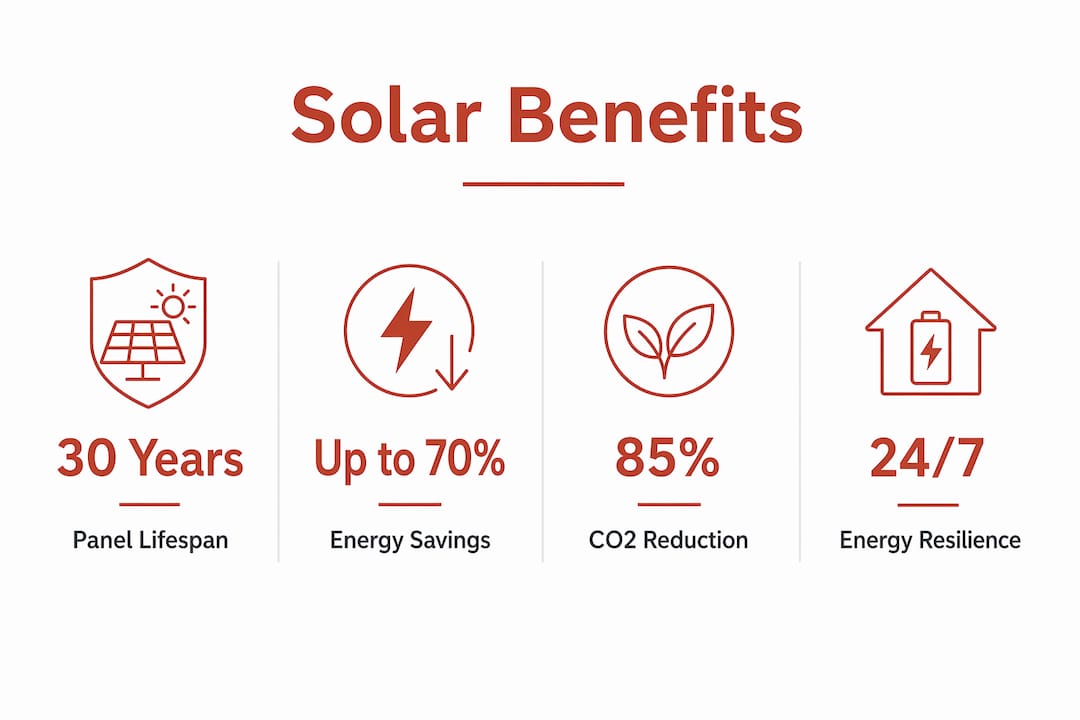
The full picture of savings also depends on your inverter type, net metering or export tariff arrangements, and your load profile. Actual bill savings are shaped by the entire system design, not just the panels themselves. This is why a proper survey and system design from a qualified installer matters so much before you commit to any equipment.
Beyond bills, there are three further economic advantages worth considering:
- Energy independence. Generating your own electricity reduces exposure to wholesale energy price fluctuations, which have been severe in the UK since 2021.
- Property value. Multiple studies indicate that solar installations increase residential property values, though the precise uplift varies by location and system size.
- Export income. The Smart Export Guarantee (SEG) pays homeowners and businesses for surplus electricity exported to the grid, adding a revenue stream on top of bill savings.
On the environmental side, the picture requires honest assessment. Life-cycle greenhouse gas emissions of solar PV modules vary widely depending on module type, manufacturing method, and regional grid carbon intensity, with monocrystalline and PERC modules ranging from approximately 425 to 2,760 kg CO2-equivalent per kilowatt-peak across studies from 2015 to 2025. That range is wide, and it reflects genuine variation in manufacturing quality and energy sources used in production. The good news is that advances in manufacturing are steadily reducing the carbon cost of producing new modules, improving the sustainability profile of modern panels compared to those installed a decade ago.
“The most credible environmental claims for solar PV are based on transparent life-cycle assessments that account for module type, local grid carbon intensity, and end-of-life disposal. Treat any claim of ‘zero carbon’ solar with scepticism unless those factors are addressed.”
For resilience, the combination of solar and battery storage is where the real value lies. Solar-plus-battery systems provide power regardless of time of day or weather conditions, enabling continued operation during grid outages. PV panels alone cannot do this. Without battery storage, a grid-tied solar system shuts down during a power cut as a safety measure. See real examples of solar battery savings to understand what combined systems actually deliver financially.
How do solar panels contribute to the wider energy grid?
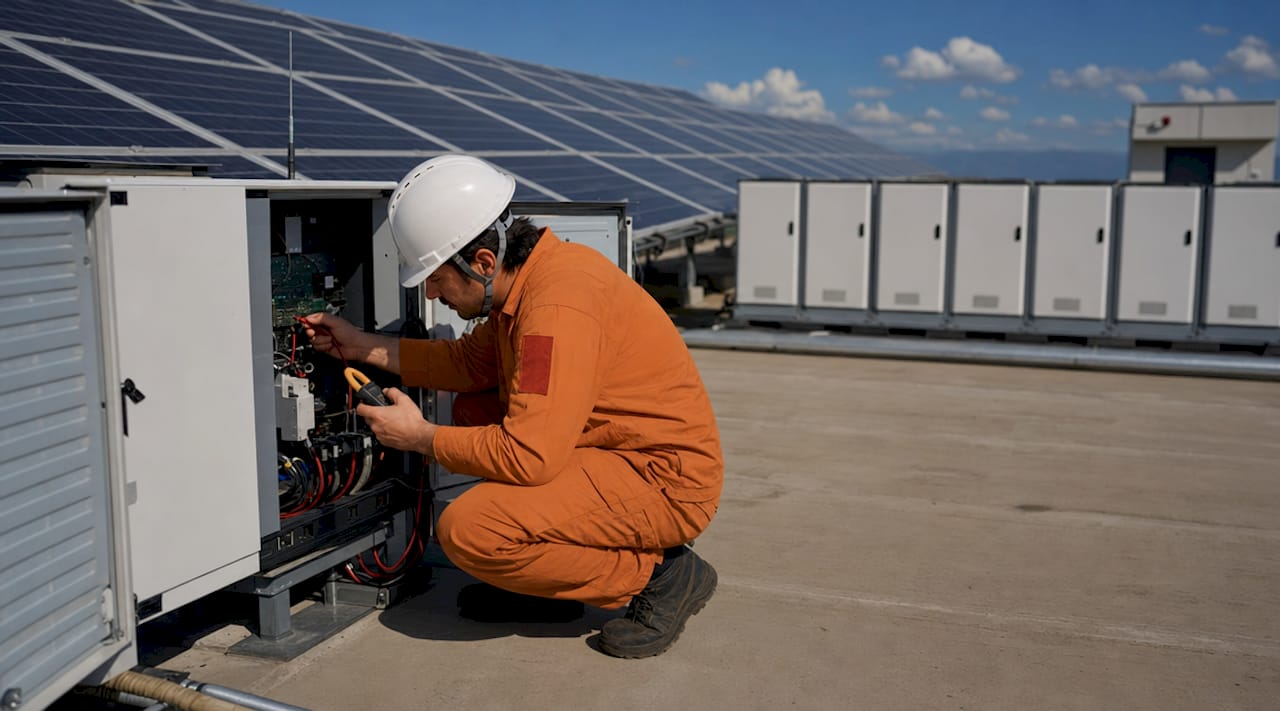
The importance of solar panels is not limited to individual properties. Solar panels operate at scales ranging from a single rooftop to vast solar farms feeding electricity directly into transmission networks. In the UK, utility-scale solar farms now contribute gigawatts of capacity to the National Grid, making solar one of the largest sources of renewable generation in the country.
At the grid level, the role of solar technology is evolving rapidly. Traditional solar inverters operate in “grid-following” mode, meaning they rely on the grid’s existing frequency and voltage signals to function. This creates challenges as solar penetration increases, because the grid needs sources that can actively support frequency and voltage rather than simply follow them.
| Grid role | Technology | Benefit |
|---|---|---|
| Distributed generation | Rooftop PV | Reduces local demand on distribution networks |
| Utility generation | Solar farms | Large-scale low-carbon electricity supply |
| Grid stability | PV with grid-forming inverters | Active frequency and voltage support |
| Resilience | PV plus battery storage | Outage independence and demand shifting |
PV plus battery energy storage systems using grid-forming inverters can actively support grid stability, providing power system benefits that were previously only available from conventional generators. This is a significant development. It means that well-designed solar-plus-storage installations are not just passive consumers of grid infrastructure. They can become active contributors to it.
Pro Tip: If you are considering a commercial solar installation, ask your installer about grid-forming inverter options and whether your local Distribution Network Operator (DNO) has any requirements or incentives for grid-supportive systems.
For businesses, the distinction between distributed rooftop systems and centralised grid resources matters for planning and tariff purposes. A commercial solar system designed with grid interaction in mind can unlock additional value through demand response programmes and flexible export arrangements.
What affects solar panel performance and lifespan?
Solar panel efficiency and longevity are shaped by several factors that are entirely within your control, and some that are not. Location and climate are the most obvious. The UK receives less solar irradiance than southern Europe, but modern monocrystalline panels perform well even in diffuse light conditions. Coastal and southern locations in England typically see stronger annual yields than northern sites, though the difference is smaller than many assume.
The factors you can control include:
- Panel orientation and tilt. South-facing roofs at 30 to 40 degrees from horizontal produce the highest annual yield in the UK. East or west-facing arrays still generate useful output, particularly when paired with battery storage.
- Shading. Even partial shading on one panel can reduce the output of an entire string. Micro-inverters or DC optimisers mitigate this significantly.
- Cleaning and maintenance. Dust, bird droppings, and lichen accumulation reduce output over time. An annual clean and periodic professional inspection extend system life and protect your warranty.
- Inverter servicing. Inverters typically have a shorter lifespan than panels. Budgeting for inverter replacement at 10 to 15 years is prudent financial planning.
Modern panels carry performance warranties of 25 to 30 years, with manufacturers guaranteeing output above 80% of rated capacity at end of warranty period. The practical lifespan of a well-maintained system often exceeds this. For detailed guidance on extending panel lifespan in UK conditions, the maintenance schedule matters as much as the equipment specification. Solar panels also continue generating in winter, though at reduced output. Understanding how solar works in winter helps you set realistic expectations and size your battery storage correctly.
Key takeaways
Solar panels deliver genuine economic and environmental value, but only when the entire system, including inverter, battery, and tariff structure, is designed to match your actual usage patterns.
| Point | Details |
|---|---|
| Inverters are non-negotiable | Solar panels produce DC; an inverter is required to convert it to usable AC electricity. |
| Savings depend on system design | Bill reductions are shaped by inverter type, export tariffs, and self-consumption, not panels alone. |
| Battery storage enables resilience | PV alone cannot power a property during a grid outage; battery storage is required for true independence. |
| Grid role is growing | PV-plus-battery systems with grid-forming inverters can actively support grid stability, not just consume it. |
| Maintenance protects your investment | Annual cleaning and periodic inverter servicing preserve output and extend system life beyond warranty periods. |
Why the inverter conversation matters more than the panel brand
Most homeowners and business owners walk into a solar conversation focused on panel brand and wattage. After years of working on installations across the south of England, I find that the inverter and system design are where the real differences in performance show up.
I have seen 400W premium panels underperform a cheaper array simply because the inverter was undersized or poorly configured for the property’s load profile. The panels are the face of the system, but the inverter is the brain. Choosing a GivEnergy, SolarEdge, or Fronius inverter with the right specification for your usage pattern will do more for your long-term savings than upgrading to a marginally higher-efficiency panel.
The other thing I would push back on is the idea that solar is primarily an environmental gesture. It is a financial asset. Treat it like one. Get a proper survey, model your self-consumption, and size your battery storage to your actual overnight demand. The switch to solar energy makes strong financial sense in 2026, but only when the system is designed with your specific property and usage in mind, not copied from a neighbour’s roof.
— Simon
How Smarthometechnical can help you go solar
Smarthometechnical specialises in solar panel installation, battery storage, and EV charger installation for homes and businesses across the south of England. Every installation begins with a detailed survey and system design, matching panel capacity, inverter specification, and battery sizing to your actual energy usage rather than a generic template.
Whether you are a homeowner looking to cut bills and gain energy independence, or a business seeking to reduce operating costs and meet sustainability targets, Smarthometechnical designs and installs systems that perform. Explore our solar installation services or contact the team directly for a no-obligation quote and system assessment tailored to your property.
FAQ
How do solar panels actually generate electricity?
Solar PV panels convert sunlight into DC electricity via the photovoltaic effect, where photons striking silicon cells displace electrons. An inverter then converts that DC output into AC electricity compatible with your property’s circuits.
Can solar panels save money on energy bills?
Yes, though the level of saving depends on your system size, electricity usage patterns, and how much generated power you consume on-site. Savings are maximised when system design accounts for your load profile, inverter type, and available export tariffs such as the Smart Export Guarantee.
Do solar panels work during a power cut?
Standard grid-tied solar panels shut down during a power cut for safety reasons. Battery storage combined with solar enables continued power supply during outages, providing genuine energy resilience that PV alone cannot deliver.
What is the lifespan of a solar panel system?
Modern solar panels carry performance warranties of 25 to 30 years, guaranteeing output above 80% of rated capacity. Inverters typically require replacement at 10 to 15 years, so factoring that cost into your financial planning gives a more accurate picture of long-term returns.
Are solar panels genuinely good for the environment?
Life-cycle emissions vary by module type and manufacturing method, but modern monocrystalline panels have a significantly lower carbon footprint than fossil fuel generation over their operational life. Advances in manufacturing continue to reduce the carbon cost of producing new modules.
