
What does a solar energy contract actually cover?
A solar energy contract is a legally binding agreement between a property owner and a solar installer or provider, setting out every detail of the arrangement: who owns the equipment, who pays for what, and what happens if something goes wrong. These agreements typically run for 10 to 25 years, making them one of the longer financial commitments most homeowners will ever sign.
The core elements you will find in any solar agreement include:
- Roles and responsibilities for both the homeowner and the provider
- Payment terms, whether that is a one-off purchase, monthly lease, or per-unit electricity rate
- Equipment details, listing the specific panels, inverters, and mounting hardware being installed
- Warranties, covering both the installation workmanship and the manufacturer’s equipment guarantee
- Maintenance obligations, clarifying who arranges and pays for repairs
- Cancellation and dispute resolution clauses, setting out your exit options
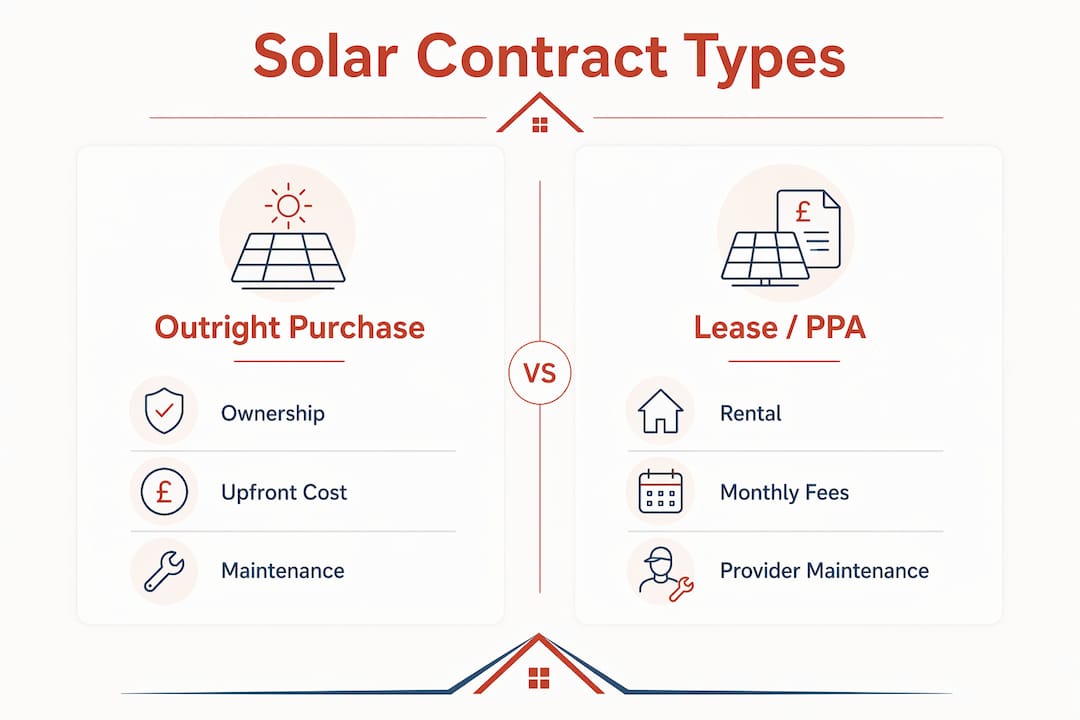
The three main contract types are outright purchase (you own the system from day one), a lease (you rent the equipment and pay a monthly fee), and a Power Purchase Agreement or PPA (a third party owns the system and you pay for the electricity it generates). Each model carries a very different set of financial and legal implications, which the sections below unpack in detail.
Table of Contents
- How solar energy contracts work in practice
- Key terms and conditions you need to read carefully
- Benefits and challenges of solar contracts, especially PPAs
- How UK homeowners should approach reviewing and negotiating solar contracts
- Residential vs commercial solar contracts: what changes?
- How UK government incentives affect solar contracts
- Energy export and feed-in tariff considerations in your contract
- Financial and environmental implications over the full contract term
- A practical checklist for negotiating favourable contract terms
- Smarthometechnical makes solar installation straightforward
- Key takeaways
How solar energy contracts work in practice
The operational reality of a solar contract depends almost entirely on which model you choose. With an outright purchase, you own the system, bear all maintenance costs, and keep every penny of the savings. With a lease or PPA, a third-party provider retains ownership, handles maintenance, and charges you under the terms agreed at signing.
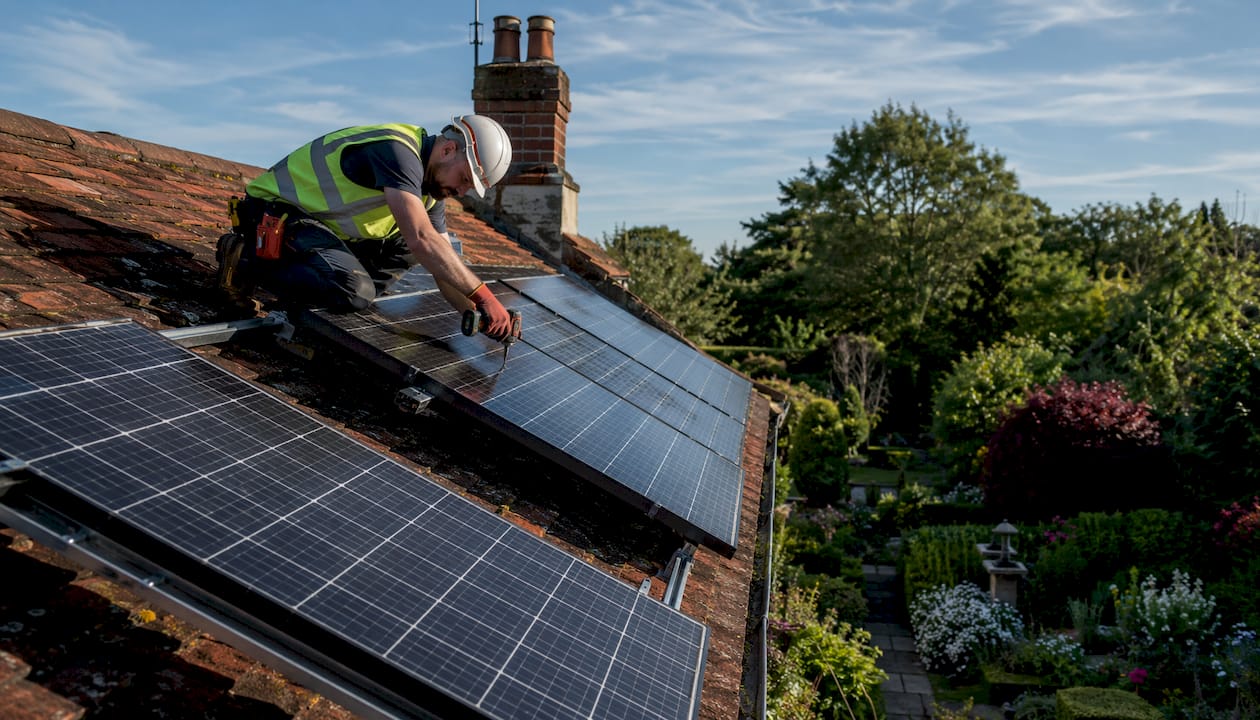
Under a Solar Power Purchase Agreement, the provider arranges financing, design, permitting, and installation. You simply agree to host the panels and buy the electricity they produce. The purchase price is typically set at or slightly below the retail rate you would otherwise pay your energy supplier.
Key financial mechanics to understand:
- Escalation clauses adjust your payment rate annually, typically by 1%–5%, to account for inflation and maintenance costs over the contract term
- Performance-based billing in PPAs means you pay only for what the system actually generates, not a fixed monthly amount regardless of output
- Lease payments are fixed monthly fees, independent of how much electricity the panels produce
- Outright purchase removes ongoing payments entirely once the system is paid for, though you carry the cost of any repairs
Pro Tip: Ask your installer to show you the projected annual payment schedule for the full contract term before you sign. A 2% escalator sounds modest, but compounded over 20 years it adds up considerably.
Maintenance responsibilities vary sharply by contract type. Under a PPA or lease, the provider is generally responsible for keeping the system operational. Under an outright purchase, that responsibility sits entirely with you, so understanding maintenance obligations before signing matters.
Key terms and conditions you need to read carefully
Solar contracts are long documents, often 20 pages or more, and the clauses that matter most are rarely at the front. The National Agricultural Law Center notes that solar agreements can simultaneously function as an option, an easement, and a lease, each with different effects on your property rights.
Critical sections to review:
- Scope of work: confirms exactly what equipment will be installed and any verbal promises made during the sales process
- Performance guarantees: specify minimum kWh generation estimates, not guaranteed financial savings, since actual savings depend on fluctuating energy rates
- Warranty terms: distinguish between the workmanship warranty (covering installation faults) and the manufacturer warranty (covering equipment defects). If your installer ceases trading, the manufacturer warranty may still apply but finding a local repairer is not guaranteed
- Escalation rates: annual price adjustments of 1%–5% are standard in PPAs and leases
- Cancellation policy: UK solar contracts typically include a right of rescission period and specific notice requirements for early termination
- Exclusions: standard warranties rarely cover damage from natural events such as hail, flooding, or high winds. You will need separate property insurance to cover those risks
- Dispute resolution: look for the process set out for resolving disagreements, whether that is mediation, arbitration, or court
Pro Tip: Before signing any long-term solar agreement, engage a solicitor with experience in renewable energy law. Clauses granting exclusive development rights or creating property encumbrances can affect your ability to sell or remortgage the property.
Benefits and challenges of solar contracts, especially PPAs
The appeal of a PPA or lease is straightforward: no large upfront cost, no responsibility for equipment maintenance, and a predictable electricity rate from day one. For homeowners who cannot or do not want to spend £6,000–£10,000 on an outright purchase, third-party ownership models open the door to solar without the capital outlay.
Benefits:
- Lower or zero upfront cost compared with purchasing outright
- Provider handles system maintenance and repairs throughout the contract
- Predictable electricity costs, often below the standard grid rate at the point of signing
- Cash flow can be positive from the day the system is commissioned
Challenges:
- Long-term obligations of up to 25 years with limited flexibility to exit early
- Performance guarantees cover energy generation estimates, not guaranteed bill savings
- Annual price escalators mean your rate rises each year, even if grid prices fall
- The system remains the provider’s asset, so you cannot claim ownership-related incentives
- Natural disaster damage is excluded from most standard warranties, requiring separate cover
- Third-party ownership can complicate property sales, as the buyer must either take over the contract or the system must be removed
The outright purchase model avoids most of these complications but requires significant upfront investment and places all maintenance responsibility on you. Understanding how solar panel guarantees work before committing to any model is worth the time.
How UK homeowners should approach reviewing and negotiating solar contracts
UK solar contracts carry specific legal weight. Moore Barlow, a law firm specialising in renewable energy, notes that long-term solar contracts function as property encumbrances and that expert legal review is strongly advised before signing.
Practical steps for UK homeowners:
- Read every section, including the technical appendices. Do not rely on a verbal summary from the sales representative
- Verify cancellation rights are clearly stated, including any cooling-off period and the cost of early termination
- Check for exclusivity clauses that may prevent you from entering any other energy agreement during the contract term
- Confirm the impact on your property title, particularly for leases and PPAs where the system is registered as a third-party asset
- Understand what happens on sale: some contracts transfer to the new owner, others require buyout or removal, and either scenario can affect your property’s value and saleability
- Ask for the full warranty documentation from both the installer and the manufacturer before signing, not after installation
Pro Tip: Government incentive schemes change. If your contract references a specific tariff or subsidy, ask for a clause that addresses what happens if that scheme is amended or withdrawn during the contract term.
Residential vs commercial solar contracts: what changes?
The fundamental structure of a solar energy agreement is the same whether the property is a three-bedroom semi or a warehouse. The differences lie in scale, complexity, and negotiating leverage.
Residential contracts tend to be more standardised. Installers typically offer pre-drafted agreements with limited room for negotiation, and the financial sums involved are smaller. The consumer protection framework in the UK also gives residential homeowners stronger statutory rights, including cooling-off periods under the Consumer Rights Act 2015.
Commercial contracts are larger in scope and almost always bespoke. A business leasing roof space for a solar array will negotiate terms around grid connection capacity, planning consent, business rates implications, and the impact on the building’s Energy Performance Certificate. Commercial PPAs often involve longer terms and more complex pricing structures, and the parties involved may include a developer, a funder, and a grid operator alongside the property owner. Businesses also have more leverage to negotiate escalation caps, performance floors, and exit provisions than a typical homeowner.
How UK government incentives affect solar contracts
The UK government’s Smart Export Guarantee (SEG), which replaced the Feed-in Tariff scheme in January 2020, requires licensed energy suppliers to pay homeowners for surplus electricity exported to the grid. Under an outright purchase, you receive these payments directly. Under a PPA or lease, the provider typically retains the export income, since they own the system.
The Boiler Upgrade Scheme and VAT relief on solar installations (currently 0% VAT for residential installations) apply to outright purchases. Third-party ownership models may not qualify for the same tax treatment, so check the contract’s tax provisions carefully.
Any contract that references a specific government scheme should include a clause covering what happens if that scheme changes. The Feed-in Tariff’s closure in 2019 caught some homeowners off-guard when they had assumed legacy payments would continue indefinitely.
Energy export and feed-in tariff considerations in your contract
Who receives the export payments is one of the most financially significant questions in any solar agreement. Under the SEG, the rate paid per kWh exported varies by supplier and is not fixed by regulation, so the value of export income can shift considerably over a 20-year contract.
For outright purchase owners, the contract with your installer should confirm that export rights remain with you. For PPA and lease holders, read the contract carefully: many agreements assign all export income to the provider as part of the financial model that makes zero-upfront-cost possible.
If your contract does allow you to retain export income, confirm which energy supplier you are registered with for SEG payments and whether the contract restricts you from switching suppliers. Some agreements include clauses that tie you to a specific supplier for the duration, which limits your ability to shop around for better export rates.
Financial and environmental implications over the full contract term
The financial case for solar depends heavily on which contract model you choose and how energy prices move over the next two decades. An outright purchase typically delivers the strongest long-term return because you own the asset, capture all savings, and receive export payments directly. The payback period for a typical UK residential system varies by location, roof orientation, and usage, but ownership removes the ongoing cost of escalating lease or PPA payments.
PPA and lease models shift the financial risk to the provider in exchange for a share of the savings. Over a 25-year term, a 2%–3% annual escalator can erode the initial cost advantage significantly if grid prices do not rise at the same rate.
Environmentally, the contract model does not change the carbon reduction delivered by the panels themselves. What it does affect is the incentive to maintain the system at peak output. Under a PPA, the provider has a direct financial interest in keeping the system performing well. Under an outright purchase, that responsibility falls to you, making regular servicing a genuine priority rather than an optional extra.
A practical checklist for negotiating favourable contract terms
Before you sign anything, work through these points:
- Confirm the full equipment list matches what was quoted, including panel model numbers and inverter specifications
- Check the performance guarantee states minimum kWh output, not just an estimate
- Verify the escalation rate is capped and written into the contract, not left open-ended
- Confirm who owns the export income and whether you can switch energy suppliers freely
- Read the cancellation clause and calculate the cost of early exit at years 5, 10, and 15
- Ask for both the workmanship warranty and the manufacturer warranty in writing before signing
- Confirm the contract’s position on property sale: transfer, buyout, or removal
- Check whether the agreement creates any charge or encumbrance on your property title
- Ask your solicitor to review any clause granting exclusive rights or restricting future energy agreements
- Verify that the installer is MCS-certified, as this is required for SEG eligibility in the UK
Smarthometechnical makes solar installation straightforward
Signing a solar contract is a significant decision. Smarthometechnical takes the complexity out of the process by offering solar panel installation with clear, transparent terms from the outset. No third-party ownership, no escalating PPA payments, and no ambiguity about who owns the system: you do.
As MCS-certified electrical contractors specialising in renewable energy, Smarthometechnical handles the full installation, from initial survey through to grid connection, and provides full documentation for both workmanship and equipment warranties. Every homeowner receives a straightforward contract that sets out exactly what is being installed, what it costs, and what is covered. Get in touch with Smarthometechnical today for a no-obligation quote on your solar installation.
Key takeaways
A solar energy contract is a legally binding agreement lasting 10 to 25 years, and the contract type you choose determines who owns the system, who captures the financial benefits, and what your obligations are for the full term.
| Point | Details |
|---|---|
| Contract duration | Solar agreements typically run for 10 to 25 years and function as long-term property commitments. |
| Three main contract types | Outright purchase, lease, and PPA each carry different ownership, cost, and maintenance implications. |
| Annual escalation rates | PPA and lease contracts typically include annual price increases of 1%–5% built into the agreement. |
| Legal review is advisable | Long-term solar contracts can act as property encumbrances; a solicitor should review any exclusivity or encumbrance clauses. |
| Smarthometechnical | Offers outright solar installation with transparent contracts, full warranty documentation, and MCS certification. |
Recommended
- How solar planning works: a homeowner’s guide 2026 – Smart Home Technical Ltd
- The role of solar in zero carbon homes: 2026 guide – Smart Home Technical Ltd
- Why solar panels lose efficiency: a UK homeowner’s guide – Smart Home Technical Ltd
- Solar panel installation explained for southern England – Smart Home Technical Ltd
