
Solar panel output is defined as the electrical energy, measured in kilowatt-hours, that a photovoltaic system generates under real-world conditions. Most residential systems achieve a performance ratio of 0.75 to 0.85, meaning 15–25% of potential energy is lost to temperature, shading, wiring resistance, and inverter inefficiency. Working through a solar panel output factors checklist is the most reliable way to identify which losses are controllable and where your system can genuinely improve. The key factors fall into three categories: environmental conditions, system design, and ongoing maintenance.
1. How environmental conditions affect solar panel output
Environmental factors cause the largest swings in day-to-day output. Understanding each one helps you separate temporary losses from genuine system problems.
Solar irradiance
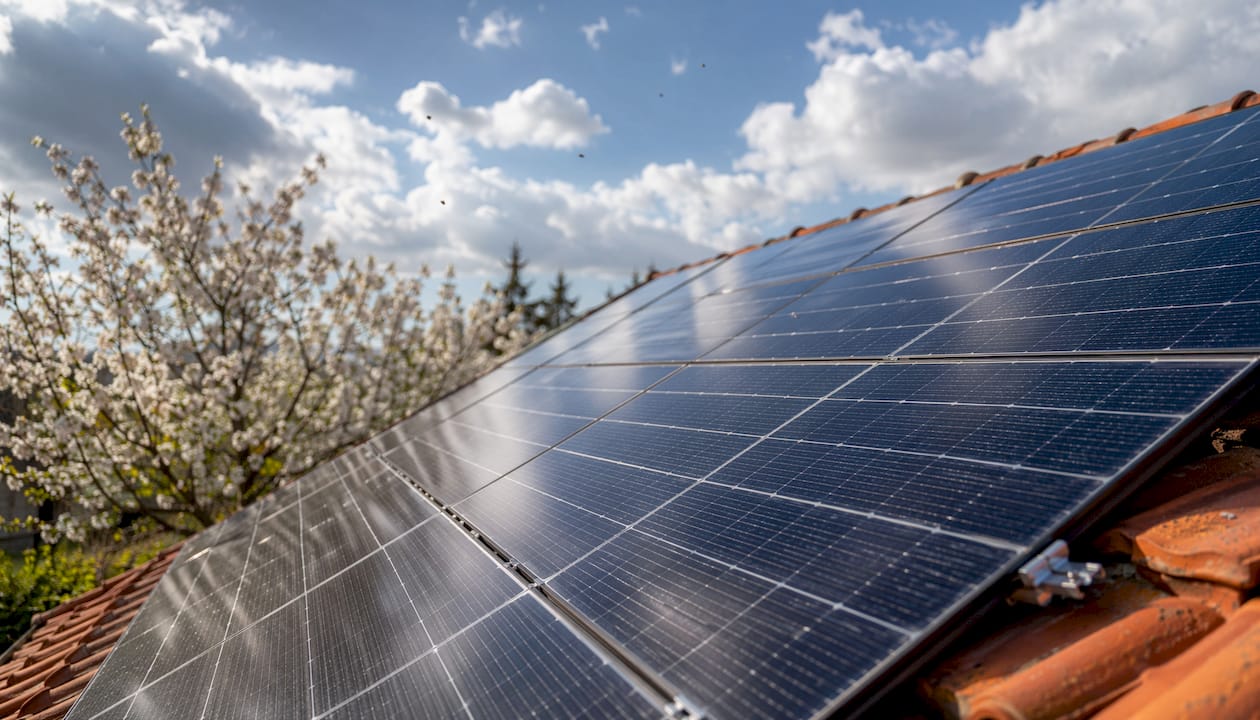
Irradiance is the amount of sunlight hitting your panels per square metre. It varies by season, weather, and your location in the UK. A cloudy february will always produce less than a clear july, and that is entirely normal. What matters is whether your output matches previous years’ data for the same period.
Shading
Shading is the single most damaging environmental factor for string-wired systems. Shade on 10% of a panel can reduce whole-system output by 30–50%, a phenomenon known as the “Christmas light effect.” One shaded cell restricts current flow through the entire string, dragging down every panel connected to it. Trimming trees and removing nearby obstructions delivers a disproportionately large output gain.
Temperature
Panels are rated at 25°C, but UK rooftops regularly exceed this in summer. Every 1°C rise above 25°C causes a 0.3–0.5% drop in output. That means a panel running at 55°C on a hot day loses roughly 9–15% of its rated capacity. Ensuring good airflow beneath the panels is one of the simplest ways to reduce this loss.
Soiling and dirt
Bird droppings, dust, and pollen accumulate on panel surfaces and block light. Soiling can reduce output by 15–30% in dusty or high-pollution environments. UK homes near farmland, motorways, or coastal areas with salt spray are particularly affected.
Ventilation beneath panels
100mm or more of air clearance between panels and the roof surface can recover 3–5% of output lost to heat build-up. This is a frequently overlooked installation detail that pays off over the system’s lifetime.
Pro Tip: Check your inverter’s monitoring portal on a clear summer day. If output is lower than expected despite good irradiance, shade or soiling is almost always the cause before any hardware fault.
2. System design factors influencing solar output efficiency
Real-world output depends more on system design than on panel efficiency ratings alone. A well-designed system with average panels consistently outperforms a poorly designed system with premium panels.
Panel orientation
Due south is the optimal orientation for UK installations. Each 15° deviation from due south reduces annual energy output by approximately 1.5%. A panel facing south-east or south-west loses a small but measurable amount across the year. East or west-facing roofs can still perform well, particularly with adjustable mounting systems that compensate for the angle.
Tilt angle
The ideal tilt angle broadly matches your latitude, which for most of England sits between 30° and 52°. Fixed-mount systems are set during installation, so getting this right from the start matters. Adjustable mounts allow seasonal correction and can recover meaningful output in winter months when the sun sits lower in the sky.
Inverter sizing and type
Inverter choice has a direct impact on how much of your panels’ output reaches your home. A DC/AC ratio of 1.1–1.3 is the accepted best practice, preventing both clipping losses and underperformance. String inverters are the most common choice for straightforward roof layouts. Microinverters and power optimisers work at the individual panel level, which makes them far more effective on roofs with partial shading or mixed orientations.
| Inverter type | Best suited for | Shading tolerance |
|---|---|---|
| String inverter | Simple, unshaded roofs | Low |
| Power optimiser | Mixed or partially shaded roofs | High |
| Microinverter | Complex roof layouts | Very high |
Wiring and cable losses
Resistance in cables wastes energy as heat. Longer cable runs and undersized conductors both increase this loss. A qualified installer will size cables correctly and keep runs as short as possible. This is not a visible factor, but it contributes to the overall performance ratio of your system.
Pro Tip: If your roof has any shading at all, ask your installer about solar optimisers before committing to a string-only inverter. The output difference on a partially shaded roof is substantial.
3. Routine maintenance and monitoring checklist to sustain output
Solar maintenance is not a set-and-forget task. Regional environmental factors require regular review against historical seasonal data to distinguish genuine degradation from temporary losses.
- Check your monitoring portal monthly. Most modern inverters provide a web or app-based dashboard. Review generation figures and compare them against the same month in the previous year.
- Inspect panels visually twice a year. Look for bird droppings, leaf build-up, cracked glass, or discolouration. Spring and autumn are the best times for this.
- Clean panels when monitoring data shows a drop. Do not clean on a schedule alone. Check inverter data first before arranging a physical clean, as unnecessary cleaning adds cost without benefit.
- Check for new shading sources annually. Trees grow. New buildings go up. A tree that caused no shading at installation may now be blocking morning sun. Walk around your property each spring and assess the horizon.
- Book a professional inspection every two to three years. A qualified electrician will check connections, test insulation resistance, and verify inverter performance. Smarthometechnical offers this as part of its maintenance service for UK homeowners.
- Keep a performance log. Record monthly generation figures in a simple spreadsheet. Year-on-year comparison is the most reliable way to spot gradual degradation before it becomes a significant loss.
- Review your home’s energy environment periodically. Changes to your home, such as a loft conversion or new extension, can create new shading sources or affect airflow around panels. An energy-efficient home environment supports better overall system performance.
Pro Tip: Seasonal output drops are normal. Always compare output against the same period in a previous year, not against your summer peak. A drop in december is expected; a drop versus last december is worth investigating.
4. Ageing and degradation factors affecting output over time
All solar panels degrade over time. Knowing the expected rate helps you distinguish normal ageing from a fault that needs attention.
- Annual degradation rate. Modern panels degrade at approximately 0.4% per year after an initial first-year loss of around 1%. Over 25 years, a well-maintained panel retains roughly 80–85% of its original output.
- First-year loss. The initial year sees a steeper drop as the panel’s materials stabilise under UV exposure. This is normal and accounted for in manufacturer warranties.
- Factors that accelerate degradation. Extreme weather, manufacturing defects, and persistent hot-running due to poor ventilation all speed up cell degradation. Panels that regularly run at high temperatures age faster.
- Inverter lifespan. Inverters typically last 10–15 years, shorter than the panels themselves. A failing inverter can mimic the symptoms of panel degradation. Replacing an ageing inverter often restores output without any panel replacement.
- When to consider upgrading. If your system is over 15 years old and output has dropped beyond what normal degradation explains, a panel efficiency review is worthwhile. Newer panels with higher efficiency ratings may deliver a better return than maintaining an ageing system.
- Extending lifespan. Good ventilation, regular cleaning, and prompt fault repair are the three most effective ways to slow degradation. Systems that are monitored consistently and maintained properly regularly outperform their rated lifespan.
Key takeaways
A solar panel system’s real-world output depends on environmental conditions, system design quality, and consistent maintenance, with shading and inverter choice having the greatest controllable impact.
| Point | Details |
|---|---|
| Performance ratio benchmark | Well-functioning systems achieve a ratio of 0.75–0.85; anything lower warrants investigation. |
| Shading is disproportionately damaging | Shade on 10% of one panel can cut whole-system output by 30–50% in string configurations. |
| Orientation and tilt matter | Each 15° deviation from due south costs approximately 1.5% in annual output. |
| Monitor before you clean | Check inverter data first; unnecessary cleaning adds cost without confirmed benefit. |
| Degradation is gradual and manageable | Modern panels lose around 0.4% output per year; good maintenance keeps losses at the lower end. |
Why shading and system design matter more than panel brand
Homeowners often focus on panel efficiency ratings when choosing a solar system. After working with installations across the UK, I find that focus is usually misplaced. The difference between a 20% and a 22% efficient panel is modest. The difference between a well-designed system with proper shading mitigation and a poorly designed one is enormous.
The “Christmas light effect” is real and consistently underestimated. I have seen systems where trimming a single tree branch or adding power optimisers to two shaded panels increased whole-system output by more than any panel upgrade could have achieved. System design decisions made at installation are the biggest lever you have.
The second thing most homeowners get wrong is treating solar as passive infrastructure. Your boiler gets serviced annually. Your solar system deserves the same attention. A monthly glance at your monitoring app takes two minutes and catches problems early. A solar panel lifespan guide is a useful starting point for building a maintenance habit.
Finally, set realistic expectations for output variation. A grey january will always disappoint compared to july. What matters is whether your system performs consistently against its own history. That comparison, done honestly and regularly, tells you everything you need to know.
— Simon
Smarthometechnical’s solar installation and monitoring services
Smarthometechnical specialises in solar panel installation for UK homeowners, with every system designed to maximise real-world output from day one. That means correct orientation, inverter sizing, and ventilation clearance built into the installation, not added as an afterthought.

Beyond installation, Smarthometechnical provides monitoring support and maintenance services, including panel cleaning, inverter health checks, and performance reviews. If your system is underperforming or you want a professional assessment of your current setup, contact Smarthometechnical for a personalised review. The team works across southern England and brings the same attention to detail to a maintenance visit as to a full new installation.
FAQ
What is a good performance ratio for a solar panel system?
A performance ratio of 0.75–0.85 is the standard industry benchmark. Anything below 0.75 suggests losses from shading, soiling, inverter inefficiency, or wiring resistance that are worth investigating.
How often should I clean my solar panels?
Clean your panels when monitoring data shows a drop in output, not on a fixed schedule. In dusty or high-pollution environments, this may mean two to three times a year; in cleaner areas, annual cleaning is often sufficient.
Does shade really affect the whole system, not just one panel?
Yes. In a standard string configuration, shade on just 10% of one panel can reduce whole-system output by 30–50%. Power optimisers or microinverters eliminate this problem by allowing each panel to operate independently.
How much output do solar panels lose each year as they age?
Modern panels degrade at approximately 0.4% per year after an initial first-year loss of around 1%. A well-maintained system retains roughly 80–85% of its original output after 25 years.
Why is my solar output lower in winter?
Lower irradiance, shorter days, and a lower sun angle all reduce winter output. Compare your figures against the same period in a previous year rather than against summer production to get a meaningful picture of system health.
Recommended
- Solar panel efficiency explained for homeowners in 2026 – Smart Home Technical Ltd
- Why solar panels lose efficiency: a UK homeowner’s guide – Smart Home Technical Ltd
- Solar panel installation explained for southern England – Smart Home Technical Ltd
- How solar planning works: a homeowner’s guide 2026 – Smart Home Technical Ltd
