
Solar panel size directly determines how much electricity your system produces, how well it fits your roof, and what you pay for installation. Get it wrong and you either run short of power or waste money on panels your roof cannot accommodate. The right size balances wattage, physical dimensions, efficiency, and your actual energy consumption.
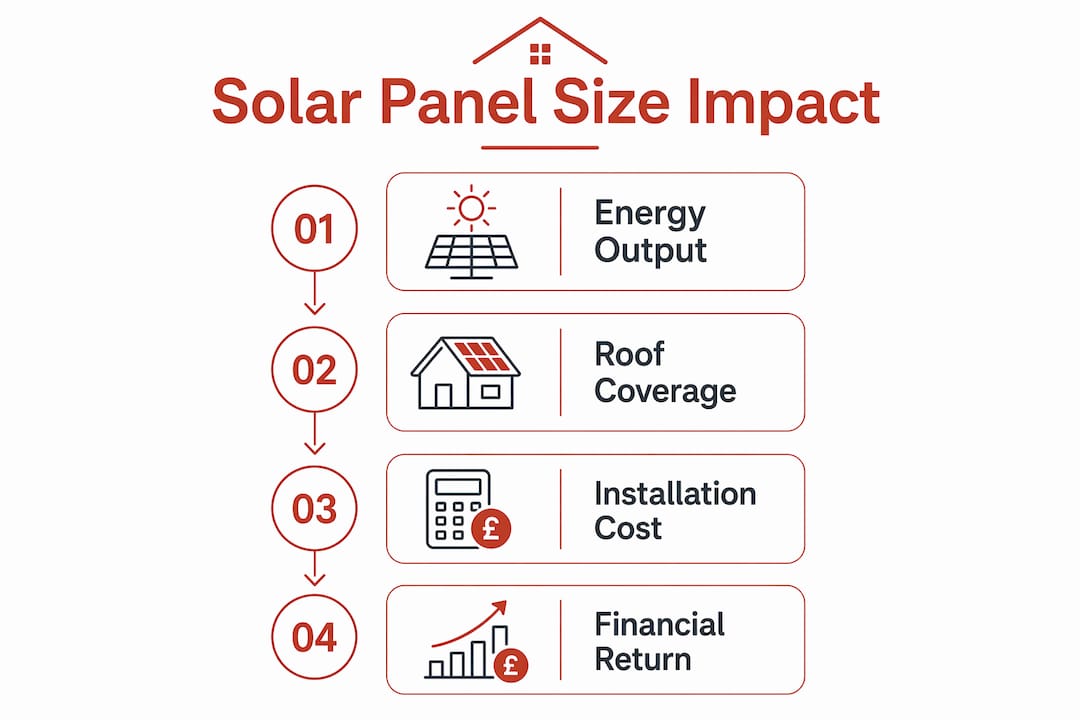
Here is what size affects in practice:
- Energy output: larger panels with higher wattage generate more electricity per unit, reducing the number of panels needed for a given system capacity
- Roof coverage: physical dimensions dictate how many panels fit within your usable roof area, accounting for shading, orientation, and fire safety gaps
- Power density: a high-efficiency panel produces more watts per square metre, so a smaller panel can match or beat a larger, less efficient one
- Installation cost: panel weight and count affect labour time, structural requirements, and overall project complexity
- Return on investment: oversizing beyond your consumption and export capacity reduces financial returns, while undersizing leaves energy needs unmet
How solar panel wattage connects directly to your energy output
Wattage, expressed as Wp (watt peak), measures the maximum electrical power a panel produces under standard test conditions. It is the single most useful number when comparing panels, because it tells you exactly how much electricity a panel can contribute to your system.
Higher wattage panels produce more energy, which means you need fewer of them to reach a target system capacity. Residential panels in the UK typically range from 300W to 450W; commercial panels regularly exceed 500W. A 4kWp system built from higher wattage panels needs fewer panels; lower wattage panels require more units for the same system capacity. That difference matters on a constrained roof.
Wattage is not fixed by physical size alone. Technology plays a large role:
- Monocrystalline panels achieve higher wattage from a given footprint because their cells convert sunlight more efficiently
- Polycrystalline panels are slightly less efficient, so they need more surface area for the same output
- Thin-film panels have the lowest power density and suit specialist applications rather than standard UK rooftops
Choosing a higher wattage panel affects three things simultaneously: the number of panels you need, the roof area consumed, and the total system cost. A 4kWp system typically generates around 3,400–4,200kWh per year in the UK, enough to cover a meaningful share of a typical household’s annual consumption.
What do solar panel dimensions mean for your roof space?
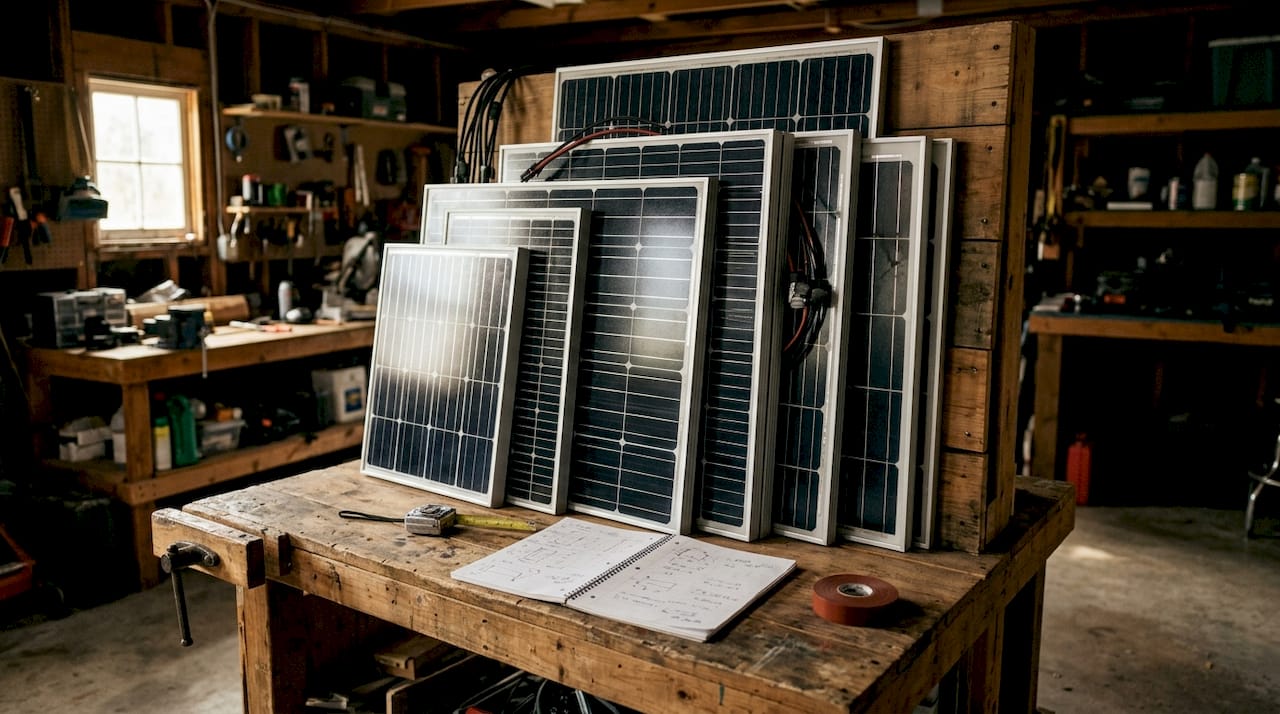
Physical size is where theory meets your actual roof. Typical UK residential panels measure approximately 1.7m by 1m and weigh 16–20kg. Commercial panels are larger and heavier than typical residential panels.
| Panel type | Typical dimensions | Typical weight | Cell count | Typical wattage |
|---|---|---|---|---|
| Residential | 1.7m × 1m | 16–20kg | — | 300W–450W |
| Commercial | 2m × 1m | 25kg+ | — | 500W |
Those dimensions have real consequences for your roof layout. A south-facing roof with several tens of square metres of usable space can fit a typical number of standard residential panels sufficient for a moderate system size. Lose a strip to a chimney stack or a dorsal vent and that number drops fast.
Several factors reduce the usable area below the total roof area:
- Shading from chimneys, trees, or neighbouring buildings cuts output and may make certain zones unviable
- Orientation and pitch affect generation; south-facing roofs at a suitable pitch perform best in the UK
- Fire safety gaps are mandatory under UK regulations and reduce the number of panels that can be installed
- Structural capacity of older roofs may limit the total weight of panels and mounting hardware
The weight consideration is often overlooked. Each panel adds weight to your roof structure that must be considered alongside mounting hardware. Roofs with ageing timbers or non-standard construction may need a structural survey before installation proceeds. Understanding how roof materials interact with mounting systems is part of any thorough pre-installation assessment.
Does solar panel efficiency change the size you actually need?
Efficiency is the percentage of sunlight a panel converts into electricity. Two panels of identical physical size can have very different outputs if their cell technology differs. This is why solar panel efficiency deserves as much attention as wattage when you are choosing a system.
High-efficiency panels produce more watts per square metre, which is the key metric for anyone with a constrained roof. Monocrystalline technology consistently delivers superior efficiency over polycrystalline or thin-film alternatives, meaning you can achieve the same system capacity with fewer, smaller panels. For a terraced house with limited south-facing roof space, that difference can determine whether a viable system is possible at all.

Power density improvements in recent years mean that panels of similar physical size now achieve considerably higher wattage than models from five years ago. Choosing last year’s technology to save money upfront can cost you in generation over a 25-year system life.
Pro Tip: If your usable roof area is under 15 square metres, prioritise efficiency rating over panel count. A smaller array of high-efficiency monocrystalline panels will outperform a larger array of lower-grade panels in the same space.
How to work out the right system size for your home or business
Sizing a solar system is a five-step process, and skipping any step leads to either an undersized system that disappoints or an oversized one that wastes your budget.
-
Review your annual electricity consumption. Pull your last 12 months of bills and find your total kWh figure. A typical UK household uses around 2,700–3,500kWh per year, though households with electric vehicles or heat pumps can use considerably more.
-
Assess your roof’s usable area. Measure the total roof area and subtract zones affected by shading, roof features, and mandatory fire gaps. Note the orientation and pitch of each usable section.
-
Set a generation target. Most UK installers aim for a system that covers a substantial portion of annual consumption, since generating more than you can use or export efficiently reduces financial returns. Matching generation to consumption is the foundation of a well-designed system.
-
Select panel wattage and calculate panel count. Divide your target system capacity (in watts) by the wattage of your chosen panel. A 4,000W system using panels of higher wattage needs a smaller number of panels; check whether ten panels physically fit your usable roof area.
-
Account for future demand. If you plan to add an EV charger or heat pump within the next few years, factor in that additional load now. Sizing slightly above current needs avoids a costly system expansion later.
UK expert insights on installation costs and regulatory constraints
Panel size choices ripple through every part of the installation process, from scaffolding to structural surveys to final commissioning costs.
Larger panels reduce the total number of units on a roof, which can lower labour time per watt. Fixed costs such as scaffolding, wiring, and inverter installation spread across more capacity, so larger systems tend to offer better value per kWp. A 3kWp system typically costs around £6,000–£7,000; a 4kWp system usually falls between £7,000 and £9,000; systems of 5kWp or more can reach £9,000–£11,000 or beyond, depending on equipment and roof complexity.
However, heavier panels create structural demands that can offset those savings. Older properties, particularly those with Victorian or Edwardian roof structures, may require timber reinforcement before installation can proceed. That cost rarely appears in a headline quote.
UK fire safety regulations add another layer of constraint. Fire safety requirements mandate specific panel placement and spacing, including fire gaps that reduce the total number of panels a roof can accommodate. In-roof systems face additional classification requirements that affect both panel choice and installation method.
Smarthometechnical’s view: Oversizing a solar system beyond your household’s consumption and export capacity rarely delivers the financial return homeowners expect. The goal is not the largest possible array but the one that best matches your actual usage, your roof’s physical constraints, and the UK’s regulatory requirements. Every system we design starts with a site-specific assessment rather than a standard package.
Choosing higher-wattage panels to reduce unit count is a sound strategy, but only when the roof structure can bear the load and the system capacity aligns with real consumption. Solar panel output factors including orientation, shading, and seasonal variation all feed into that calculation.
Key takeaways
Solar panel size affects energy output, roof coverage, installation cost, and long-term financial return, making it the central variable in any well-designed UK solar system.
| Point | Details |
|---|---|
| Wattage drives output | Residential panels range from 300W to 450W; higher wattage means fewer panels for the same system capacity. |
| Physical size constrains layout | Typical UK residential panels measure 1.7m × 1m and weigh 16–20kg; roof area, shading, and fire gaps limit how many fit. |
| Efficiency beats raw size | High-efficiency monocrystalline panels produce more watts per square metre, vital when roof space is limited. |
| Match size to consumption | UK installers typically target a substantial portion of annual household consumption to maximise financial returns. |
| Larger systems cost less per kWp | Fixed installation costs spread over more capacity, but structural load and regulatory constraints must be assessed first. |
Recommended
- The role of solar in 2026 homes: a complete guide – Smart Home Technical Ltd
- Solar panel efficiency explained for homeowners in 2026 – Smart Home Technical Ltd
- The role of solar in zero carbon homes: 2026 guide – Smart Home Technical Ltd
- How solar planning works: a homeowner’s guide 2026 – Smart Home Technical Ltd
