
Hampshire new builds are now subject to mandatory solar PV requirements under the Future Homes Standard, making solar a legal requirement rather than a lifestyle choice. From March 2027, every new dwelling must include a solar array covering 40% of its ground-floor area, typically producing a 3 to 4 kWp system on a detached or semi-detached home. The Smart Export Guarantee pays homeowners for electricity exported to the grid, and Solar Together Hampshire offers a group-buying route to reduce upfront costs. Whether you are buying a new build, own a bungalow, or live in a leasehold flat, your solar options in Hampshire are broader and more financially rewarding than most homeowners realise.
1. What solar PV is mandatory for new builds in Hampshire
The Future Homes Standard comes into force on 24 March 2027, with a transitional period already under way. Solar PV is now a functional building regulation requirement, not an optional extra, which fundamentally changes how developers plan new homes across Hampshire.
For most detached and semi-detached new builds, the mandatory array size lands at 3 to 4 kWp. Terraced houses typically see slightly smaller systems due to roof area constraints. Exemptions exist where shading from neighbouring structures, building height, or output feasibility make installation impractical, but developers must demonstrate these conditions formally.
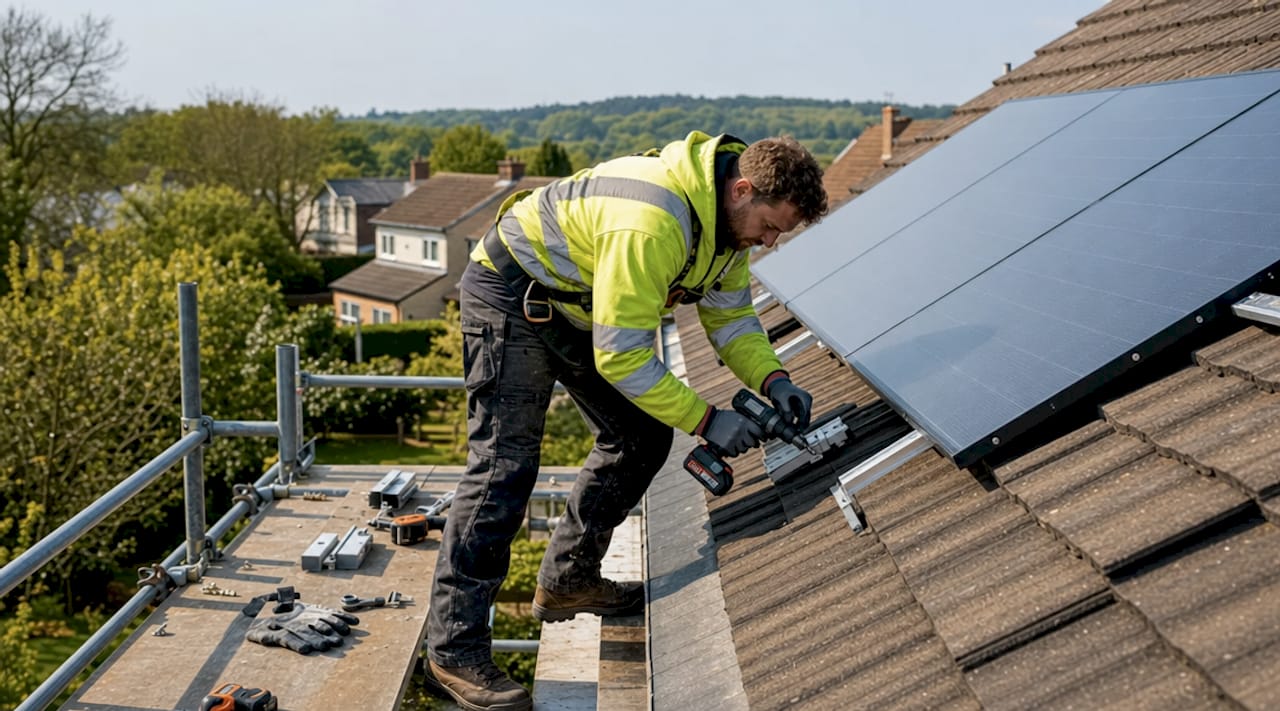
Roof design matters enormously at the planning stage. South-facing pitches between 30 and 45 degrees deliver the highest annual yield in Hampshire’s latitude. East or west-facing roofs are still viable and can accommodate split arrays, but output drops by roughly 15 to 20% compared with a true south orientation.
Pro Tip: Ask your developer for the SAP 10.3 calculation sheet before exchange of contracts. This document confirms the solar array size, orientation, and expected annual output built into your home’s energy rating.
2. How solar options differ for leasehold flats and terraced houses
Leasehold flat owners face a distinct legal pathway compared with freehold homeowners. Freeholder or management company consent is required for rooftop solar as a lease alteration, and this is separate from planning permission. Administration fees for this consent typically run between £50 and £250.
The practical steps for leasehold solar in Hampshire are:
- Obtain a copy of your lease and identify the alteration clause
- Commission a scoped proposal covering mount type, electrical routing, and reversibility
- Submit a written application to the freeholder or managing agent with full technical drawings
- Allow 4 to 8 weeks for a formal response, and budget for administration fees
Detailed proposals addressing reversibility significantly improve approval rates because they reduce the freeholder’s perceived risk. Non-penetrating mounting systems are the preferred solution for flat-roofed blocks, as they preserve waterproofing integrity and simplify the consent argument.
Terraced houses in Hampshire present a different challenge. Roof space is often limited to one slope, and party wall considerations can restrict cable routing. Smaller arrays of 1.5 to 2.5 kWp are common on terraced properties, but even these generate meaningful savings when paired with a battery.
3. Bungalow solar suitability and flat roof options compared
Bungalows represent some of the best solar opportunities in Hampshire. A typical bungalow supports a 3 to 5 kW solar system with installed costs ranging from £4,500 to £9,000 and estimated annual savings of £600 to £950. The large, accessible roof area and lower ridge height reduce installation complexity and scaffolding costs.
| Property type | Typical system size | Installed cost range | Annual saving estimate |
|---|---|---|---|
| Bungalow | 3 to 5 kWp | £4,500 to £9,000 | £600 to £950 |
| Flat roof (residential) | 3 to 6 kWp | £5,500 to £11,000 | £650 to £1,100 |
| Terraced house | 1.5 to 2.5 kWp | £2,800 to £5,000 | £300 to £550 |
Flat roofs require specialised ballasted or non-penetrating mounting frames, which add cost but allow panels to be tilted to an optimal angle regardless of the roof’s pitch. This flexibility means a flat-roofed extension or garage can actually outperform a poorly oriented pitched roof.
One underappreciated challenge with bungalows is roof fragmentation. Dormers, chimneys, and skylights can break up what looks like a generous roof area, complicating string inverter design and reducing the number of usable panels. In these cases, microinverters or DC optimisers fitted to individual panels prevent shading on one panel from dragging down the output of the entire string.
Pro Tip: On a bungalow with dormers or a flat roof with multiple obstructions, specify panel-level optimisers from the outset. The additional cost of £30 to £60 per panel is recovered within two to three years through improved yield.
4. Financial incentives and schemes for Hampshire homeowners
The financial case for solar on a Hampshire new build is stronger in 2026 than at any previous point, driven by three overlapping mechanisms.
The Smart Export Guarantee pays homeowners for every unit of electricity exported to the grid. Tariff rates vary by supplier, typically ranging from a few pence to around 15p per kWh as of 2026. To qualify, your system must hold MCS certification and your meter must support half-hourly export readings. Without both, SEG payments are blocked regardless of how much electricity your panels generate.
Solar Together Hampshire operates as a group-buying scheme, using collective purchasing power to negotiate lower equipment and installation prices from vetted installers. Residents across Hampshire can register interest and receive a personalised quote that reflects the group discount, which makes it particularly useful for homeowners retrofitting solar after moving into a new build.
Developer-installed solar is typically 15 to 25% cheaper than retrofit installations because panels are integrated during construction rather than added to a finished roof. This cost advantage is built into the property’s EPC rating, which can improve mortgage terms with green-lending products from lenders including Nationwide and Barclays.
Battery storage remains optional under current regulations but adds measurable value. Matching battery size to household load is more important for savings than brand or inverter choice. A 5 to 10 kWh battery paired with a smart tariff such as Octopus Flux or Intelligent Octopus can shift grid import to off-peak periods, compounding the savings from solar generation. You can see real battery savings examples from Hampshire and Devon households to benchmark realistic returns.
5. How design choices affect solar performance in new builds
Early integration with architects and builders improves solar yield by 20 to 30% compared with fitting panels onto an existing roof geometry. This figure matters because it represents the difference between a system that covers your daytime consumption and one that merely satisfies the building regulation minimum.
Key design decisions that affect performance include:
- Roof orientation and pitch: South-facing at 35 degrees is optimal; east or west splits are acceptable but require larger arrays to meet the 40% ground-floor coverage rule
- Shading analysis: Trees, neighbouring buildings, and roof features must be modelled at the design stage using tools such as PVsyst or the HEM compliance model
- Inverter selection: String inverters suit unobstructed roofs; microinverters or optimisers suit complex roof geometries or mixed orientations
- Battery-ready wiring: Installing conduit and a dedicated consumer unit space during construction costs very little but avoids expensive remedial work when you add storage later
- Smart meter compatibility: MCS certification and half-hourly metering are mandatory for SEG eligibility. Confirm these are in place at handover, not six months later
The biggest practical risk at handover is missing paperwork. Obtaining MCS certificates and export metering details from your developer at the point of legal completion prevents delays in registering for SEG payments. Treat these documents with the same urgency as your building warranty.
Key takeaways
Hampshire new builds must include solar PV under the Future Homes Standard, and homeowners who combine MCS-certified systems with the Smart Export Guarantee and battery storage will achieve the strongest financial returns.
| Point | Details |
|---|---|
| Mandatory solar from March 2027 | New builds must cover 40% of ground-floor area with solar PV, typically 3 to 4 kWp. |
| Leasehold consent is a lease matter | Freeholder permission is required, not planning permission; detailed proposals speed approval. |
| Developer-installed solar saves money | Construction-stage installation is 15 to 25% cheaper than retrofit; it also improves EPC ratings. |
| MCS and metering unlock SEG payments | Without certified installation and half-hourly metering, export income is blocked entirely. |
| Battery sizing beats brand choice | Match storage capacity to your household load profile for maximum savings, regardless of manufacturer. |
What I have learned from Hampshire new build solar projects
The question I hear most often from new build buyers is whether the developer-installed system is “good enough.” My honest answer is: it depends entirely on whether the developer optimised the design or simply met the minimum compliance threshold.
I have seen 4 kWp systems on south-facing roofs that perform brilliantly, and I have seen identically sized systems on east-facing roofs with no optimisers that generate 30% less than the homeowner was told to expect. The Future Homes Standard sets a floor, not a ceiling. Developers who use modern compliance tools like HEM for SAP 10.3 modelling can design systems that genuinely maximise output, but not all of them do.
My advice to any Hampshire homeowner buying a new build is to ask three specific questions before exchange: What is the panel orientation? Is the system fitted with optimisers or microinverters? And who holds the MCS certificate? If the sales team cannot answer all three, escalate to the site manager or the developer’s energy consultant.
For leasehold buyers, the permission process is manageable but requires patience. I have seen freeholders refuse poorly worded requests and approve detailed technical proposals within two weeks. The quality of your application determines the outcome more than the freeholder’s disposition.
Combining solar with a battery and a smart tariff is where the real financial gains sit in 2026. A well-designed system on a Hampshire new build can cover 60 to 70% of annual household electricity demand. That is not a theoretical figure. It is what properly sized, properly oriented, properly metered systems deliver in practice.
— Simon
Solar installation for your Hampshire new build
Smarthometechnical designs and installs MCS-certified solar PV systems across Hampshire, covering new builds, bungalows, leasehold flats, and terraced houses. Every installation is specified to meet Future Homes Standard requirements and optimised beyond minimum compliance, with battery storage and smart tariff integration available from day one.

From initial roof assessment and SAP compliance checks through to handover documentation and SEG registration support, Smarthometechnical handles the full process. Pricing is competitive with developer-installed rates, particularly for homeowners adding solar post-completion. Visit the solar installations page to request a survey or speak directly with the installation team about your property’s specific requirements.
FAQ
Is solar PV compulsory on all new builds in Hampshire?
The Future Homes Standard makes solar PV a building regulation requirement for new dwellings from 24 March 2027, covering 40% of the ground-floor area. Exemptions apply where shading or structural constraints make installation impractical, but developers must evidence these formally.
Do I need planning permission for solar on a leasehold flat?
Leasehold flat owners need freeholder or management company consent under their lease terms, not planning permission. Administration fees typically range from £50 to £250, and a detailed technical proposal significantly improves approval speed.
What does the Smart Export Guarantee pay in 2026?
SEG tariff rates vary by supplier and typically range from a few pence to around 15p per kWh. To qualify, your system must hold MCS certification and your property must have a smart meter capable of half-hourly export readings.
Is battery storage worth adding to a new build solar system?
Battery storage is optional under current regulations but increases self-consumption and reduces grid import costs. Matching battery capacity to your household load profile delivers better returns than choosing a premium brand with oversized capacity.
How much cheaper is developer-installed solar than retrofit?
Developer-installed solar is typically 15 to 25% cheaper than retrofit because panels are integrated during construction. This saving is reflected in the property’s EPC rating and can support access to green mortgage products from mainstream lenders.
