
Solar panels generate electricity from light, not heat, which means they continue producing power throughout winter months even when temperatures drop well below freezing. Understanding how solar works in winter matters if you are weighing up a solar investment for a UK home or any colder climate property. The short version: output falls in winter, but it never stops entirely, and cold temperatures can actually improve panel efficiency. This article explains the science, the real limitations, and how to get the most from your system when daylight is scarce.
How solar panels generate electricity in winter
The photovoltaic effect is the process behind every solar panel. When photons from sunlight strike a silicon cell, they knock electrons loose and create a flow of electrical current. Crucially, this process responds to light, not warmth. PV output is limited by fewer daylight hours and lower sun angles in winter, not by cold temperatures themselves.
One of the most counterintuitive facts about solar energy in winter is that cold actually helps. Panel efficiency increases at lower temperatures because cooler conditions raise the voltage produced by each cell. The typical temperature coefficient sits between -0.3% and -0.5% per degree Celsius above 25°C, meaning a panel running at 5°C on a bright January day can perform 6 to 8% above its rated output. That is a genuine, measurable gain.
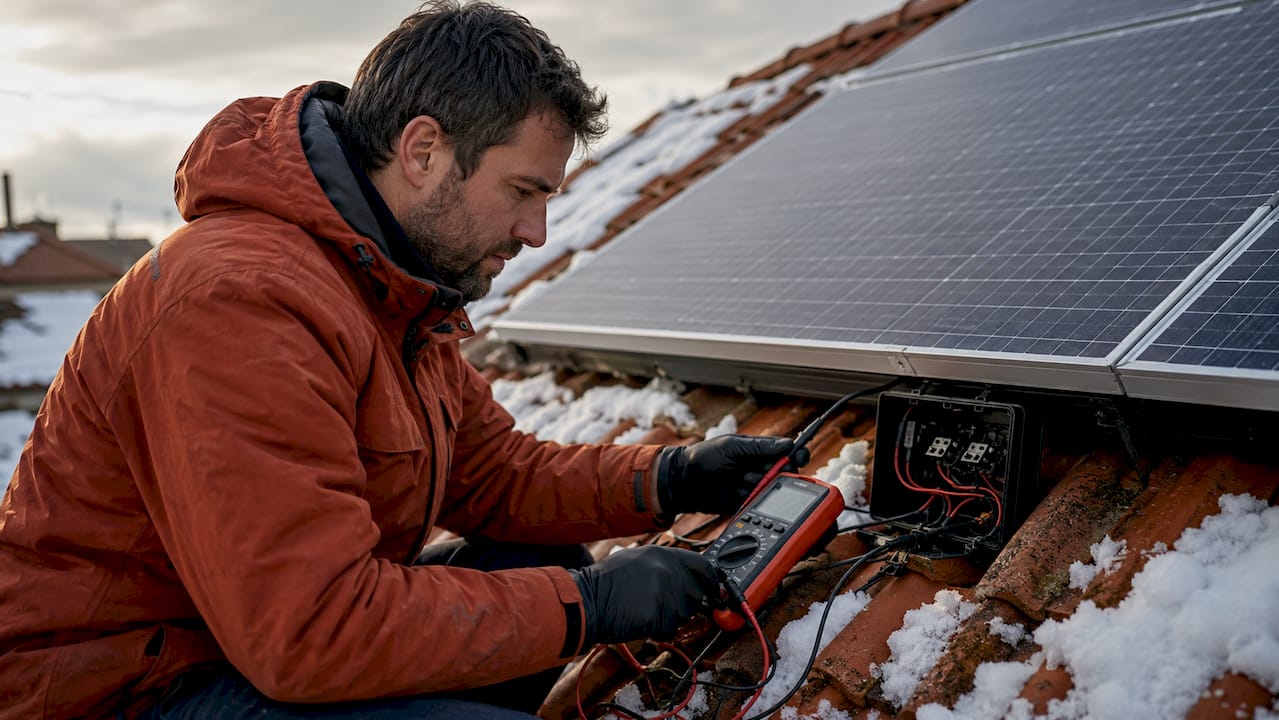
Cloudy skies are not the obstacle most people assume either. Solar panels respond to the full visible spectrum, including diffuse radiation scattered by clouds, moisture, and air molecules. Production remains relatively stable on overcast winter days, though at a lower yield than on clear sunny days. A heavily overcast December afternoon still produces electricity. It simply produces less of it.
Here is what actually drives winter solar output:
- Daylight hours. A UK winter day may offer only 7 to 8 hours of daylight compared to 16 or more in midsummer.
- Sun angle. The sun sits lower in the sky, meaning its rays travel through more atmosphere before reaching your panels, scattering and absorbing energy along the way.
- Cloud cover and fog. These reduce direct radiation but diffuse radiation partially compensates.
- Temperature. Cold improves voltage and efficiency slightly, partially offsetting the losses above.
The net result is that winter yields can fall to as low as 10% of summer yield during November to January. That sounds dramatic, but panels remain fully operational and contribute to your annual energy total every single day.
What limits winter solar power generation?
The sun’s path across the sky in December sits roughly 17 degrees above the horizon at solar noon in the UK, compared to around 60 degrees in June. That difference matters because a lower sun angle means each square metre of panel receives less direct radiation. The light also passes through a thicker slice of atmosphere, losing more energy to scattering before it arrives at your roof.
In practical terms, UK solar panels generate 40 to 60% of peak summer output on bright winter days, and 10 to 25% on heavily overcast days. Across the full October to March period, roughly 20 to 25% of a system’s annual generation occurs. That figure is worth holding onto. It means three quarters of your annual yield comes from the warmer half of the year, but winter is still contributing meaningfully.
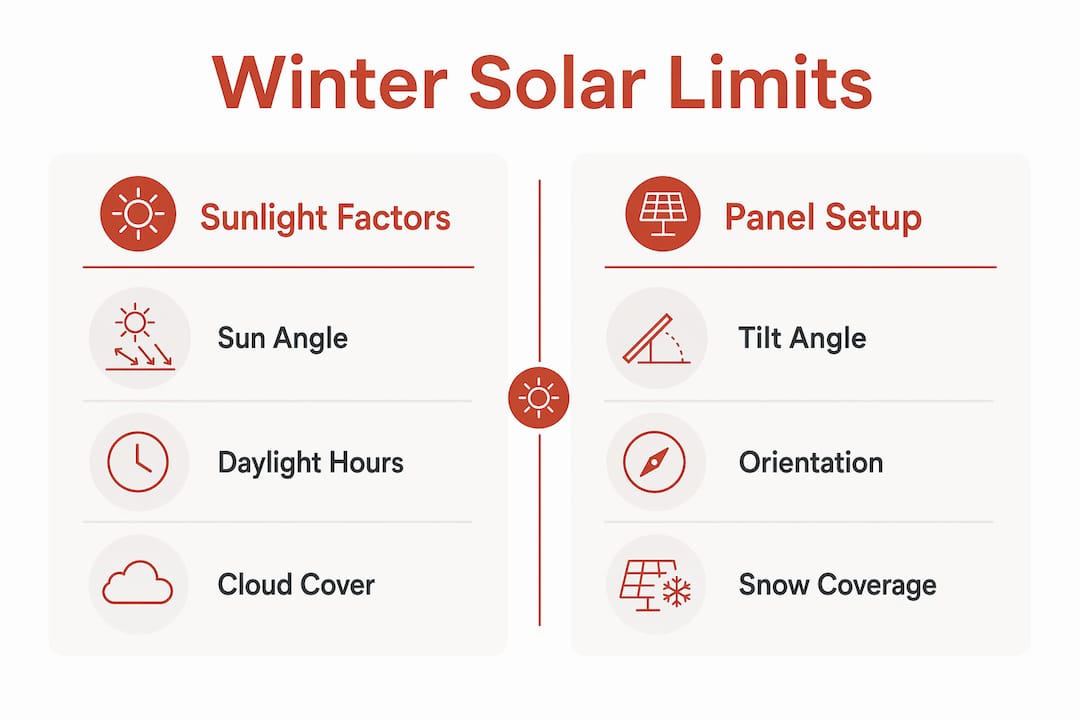
Panel orientation makes a real difference to how much of that winter light you capture.
| Orientation | Summer performance | Winter performance |
|---|---|---|
| South-facing, 35° tilt | Excellent | Good |
| South-facing, 50° tilt | Slightly reduced | Better than 35° |
| East/west split | Moderate | Lower than south |
| Flat (0° tilt) | Moderate | Poor, snow risk higher |
A steeper tilt angle of around 50 degrees improves winter capture because it presents a more perpendicular face to the lower winter sun. It also helps shed snow, which matters in areas that see regular snowfall.
Pro Tip: If you are installing a new system and live in northern England or Scotland, ask your installer about a 45 to 50 degree tilt angle rather than the standard 35 degrees. The winter gain is worth the marginal summer reduction.
Does snow affect solar panels in winter?
Snow is the concern most homeowners raise first, and it is worth addressing directly. Thick snow cover can cause significant energy losses, with complete coverage causing total output loss for the duration. In extreme cases, heavy snowfall regions can see up to 30% annual energy losses from snow accumulation alone.
The good news is that most UK installations are far less exposed to this risk than that figure implies. Heavy, persistent snow is rare across most of England and Wales. When snow does settle on panels, several factors work in your favour:
- Module heat. Panels generate a small amount of heat during operation, which accelerates snow melt from beneath.
- Tilt angle. A well-angled roof panel sheds snow far more readily than a flat or shallow-mounted system.
- Thin layers. A light dusting of snow still allows some diffuse light through, producing reduced but non-zero output.
- Natural clearing. Most UK snowfall clears within 24 to 48 hours without any intervention.
Ground-mounted systems experience lower snow loss than roof-mounted systems because they allow freer snow shedding and can be positioned at steeper angles. If you have the space and are in a higher-altitude or northern location, ground mounting is worth considering.
Manual snow clearing is generally not recommended. Climbing onto a roof in icy conditions creates serious safety risks, and the energy gain from clearing a day or two of snow rarely justifies it. Frost dissipates quickly after sunrise and has minimal impact on daily output.
Pro Tip: Never use metal tools or abrasive materials to clear snow from panels. If clearing is genuinely necessary, a soft foam brush on a long handle is the only safe option, and only from ground level where reachable.
How to optimise your solar system for winter conditions
Getting the most from solar energy in winter is less about fighting the season and more about designing your system intelligently from the start.
- Choose the right tilt angle. A tilt of 45 to 50 degrees suits UK latitudes better for winter capture than the commonly installed 30 to 35 degrees.
- Prioritise south-facing installation. South-facing panels maximise exposure to the low winter sun. East and west orientations spread generation across the day but reduce peak winter output.
- Oversize your system. A larger array compensates for lower winter yield. If your summer surplus goes to export, a bigger system still pays off by covering more of your winter demand.
- Add battery storage. A battery captures surplus midday generation and shifts it to evening use, which is particularly valuable in winter when daylight hours are short. Real-world battery savings show meaningful reductions in grid import even during the darkest months.
- Shift high-energy loads to daylight hours. Running your dishwasher, washing machine, or EV charger during the solar window, typically 10am to 2pm in winter, maximises self-consumption.
- Use a smart energy management system. Devices like the Fronius Smart Meter or SolarEdge monitoring platforms track real-time generation and help you make informed decisions about when to use stored energy.
The combination of a well-sized array, battery storage, and smart load management can achieve meaningful winter self-sufficiency. A typical 4kWp system with a 10kWh battery in southern England can cover 30 to 40% of household electricity demand during winter months without any grid import during daylight hours. That figure rises significantly in spring and autumn. For homeowners in coastal locations, the solar benefits for coastal homes article covers additional optimisation considerations worth reading.
Key takeaways
Solar panels work in winter because they convert light into electricity, and cold temperatures improve rather than reduce panel efficiency. The real constraint is reduced sunlight hours and lower sun angles, not the cold itself.
| Point | Details |
|---|---|
| Cold improves efficiency | Panel voltage rises in cold weather, boosting output by up to 6 to 8% above rated performance. |
| Winter output is reduced but real | UK panels produce 40 to 60% of summer output on bright winter days and 10 to 25% on overcast days. |
| Snow rarely stops generation | Most UK snowfall clears quickly; panels shed snow naturally due to tilt and module heat. |
| System design matters | A 45 to 50 degree tilt and south-facing orientation significantly improve winter capture. |
| Battery storage closes the gap | Pairing solar with battery storage increases winter self-consumption during short daylight windows. |
What I have learned from installing solar in colder climates
After years of working with homeowners across the UK on solar installations, the most common mistake I see is not a technical one. It is an expectations problem. People read that winter yields drop to 10% of summer output and conclude that solar is not worth it in winter. That conclusion misses the bigger picture entirely.
The annual energy balance is what matters. A well-designed system earns its return across the full year, and winter generation, even at reduced levels, still offsets grid electricity that would otherwise cost you money. The homeowners who feel most satisfied with their solar investment are those who understood from day one that winter is a quieter season for the panels, not a broken one.
What I find genuinely underappreciated is the cold-weather efficiency gain. Most people are surprised to learn that a crisp, clear January day with frost on the ground can produce better panel performance than a warm, hazy August afternoon. The physics are real and measurable. Cold panels simply work better electrically, and that partially compensates for the shorter days.
The other thing I would say is this: do not let the perfect be the enemy of the good. A solar system that covers 70 to 80% of your annual electricity demand, including a modest winter contribution, is a genuinely strong outcome. Pair it with a battery and sensible load shifting, and you will be surprised how little you draw from the grid even in December.
— Simon
Get a solar system designed for year-round performance
If you are considering solar for your home and want a system that performs well across all seasons, Smarthometechnical designs and installs solar arrays specifically suited to UK conditions, including winter optimisation.

Smarthometechnical’s solar installation service covers panel selection, tilt angle optimisation, battery storage integration, and smart energy management setup. Whether you are in northern England, Scotland, or anywhere that sees genuine winters, the team sizes systems to deliver meaningful output year-round, not just in summer. Get in touch to discuss your property and find out what a well-designed solar system could realistically generate for you across every season.
FAQ
Do solar panels work in winter in the UK?
Yes. UK solar panels generate electricity throughout winter, producing 40 to 60% of summer output on bright days and 10 to 25% on overcast days. Output is lower than summer but never reaches zero during daylight hours.
Does cold weather damage solar panels?
Cold weather does not damage solar panels. In fact, lower temperatures improve electrical efficiency because cooler conditions raise cell voltage. The concern in cold weather is physical damage from ice expansion in any existing micro-cracks, but modern panels are built to withstand UK winter conditions without issue.
How much does snow affect solar panel output?
Snow covering panels completely stops output until it clears, but most UK snowfall is light and clears within one to two days. Panels shed snow naturally due to their tilt angle and the heat generated during operation.
Is it worth adding battery storage for winter solar use?
Battery storage is particularly valuable in winter because it captures surplus midday generation and shifts it to evening hours when the sun has set. This significantly increases self-consumption during the short winter solar window and reduces grid import costs.
Why does winter solar still generate power on cloudy days?
PV systems utilise diffuse radiation scattered by clouds, moisture, and air molecules, not just direct sunlight. This means panels continue producing electricity even under heavy cloud cover, though at a reduced level compared to clear-sky conditions.
