
A solar pergola is defined as an outdoor garden structure with photovoltaic (PV) solar panels integrated into its roof, generating electricity while providing shade and usable outdoor space. The best examples of solar pergola installations combine building-integrated photovoltaics (BIPV), bifacial panel technology, and considered structural design to deliver both energy savings and a genuinely attractive garden feature. For homeowners with shaded or awkwardly oriented roofs, a solar pergola offers a practical route into renewable energy without touching the main roof at all.
1. What are the most impactful examples of solar pergola installations?
Real-world solar pergola projects prove the technology works at scale. A 10.92kW bifacial solar canopy in Buckinghamshire generated 10,326kWh annually, outperforming its production estimate by 12.2%. That gap between predicted and actual output matters: it shows that well-designed solar canopies regularly beat conservative modelling assumptions.
A separate case study from Spain demonstrates the cost savings possible at a smaller scale. A custom-built 9.6kW solar pergola with 17 panels reduced the homeowner’s electricity costs by 80% annually. That figure reflects a south-facing installation in a high-irradiance location, but UK homeowners in Hampshire or Surrey can still expect substantial savings from a correctly oriented structure.
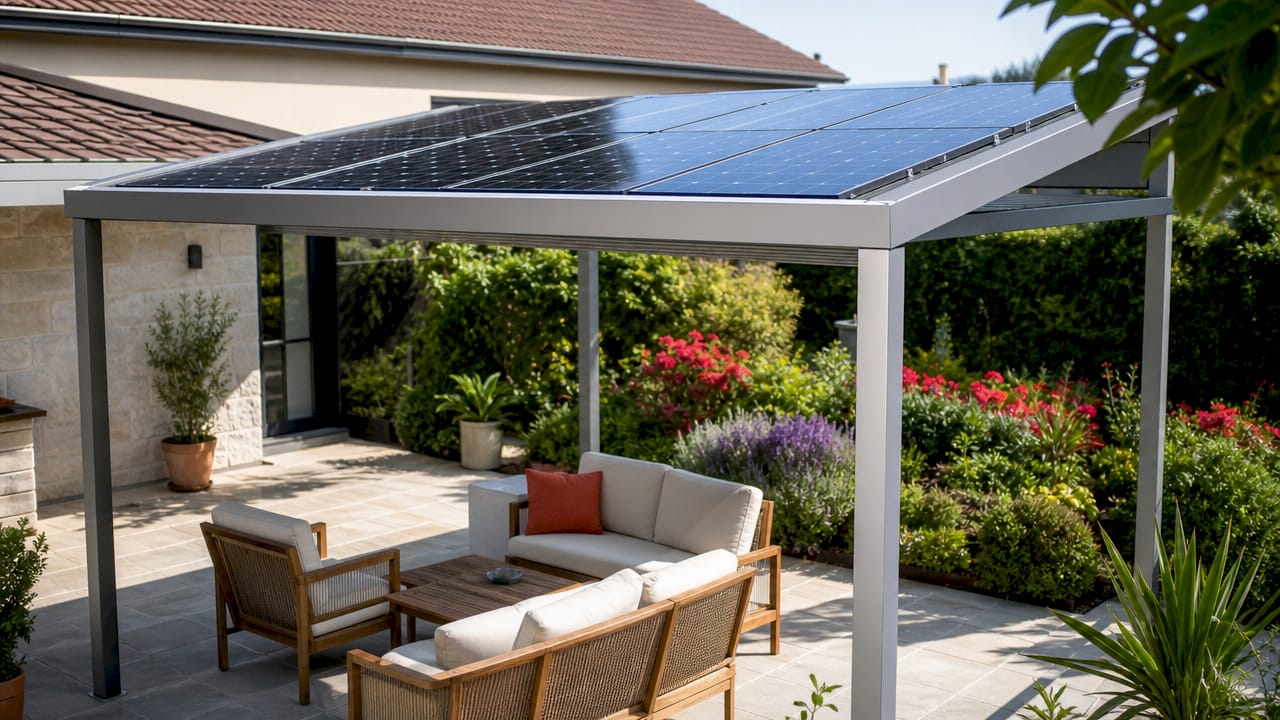
Both projects share common design choices: bifacial panels, clean aluminium framing, and a layout that treats the pergola as an architectural feature rather than an afterthought. The Buckinghamshire canopy, for instance, was designed to complement the property’s exterior rather than simply bolt panels onto an existing timber frame.
Pro Tip: When reviewing solar pergola examples near you, ask the installer for the actual annual output figure versus the predicted figure. A well-installed system should meet or exceed its modelled yield.
2. How bifacial panels define the look and output of solar pergolas
Bifacial solar panels are the standard choice for architectural solar pergolas. They generate power from both the front and rear surfaces by capturing reflected light from the ground below. That dual-sided generation increases energy yield compared to standard opaque-backed panels.
The visual benefit is equally significant. Bifacial panels use a glass rear surface instead of a white backsheet, which creates a translucent effect when viewed from underneath. Sitting beneath a bifacial solar pergola feels like sitting under a glass roof with a subtle blue or grey tint, rather than staring up at solid black rectangles. This aesthetic quality is why bifacial panels dominate the pergola market.
For homeowners weighing solar pergola design ideas, bifacial panels work best when the ground surface beneath is pale or reflective, such as light-coloured paving or gravel. A dark timber deck absorbs light rather than reflecting it, reducing the rear-surface gain.
3. How design and mounting techniques shape solar pergola effectiveness
Good solar pergola design starts with the panel, not the frame. Panel footprint and clamping hardware spacing must be established before the pergola frame is built, with 20mm to 40mm gaps required between panels for mounting hardware. Building the frame first and fitting panels later almost always results in awkward overhangs or wasted structural space.
Mounting method is the second critical decision. Ballasted mounting systems are preferred on flat surfaces because they avoid penetrating the structure, which eliminates the risk of leaks. Timber pergolas require particular attention to drainage: the roof must incorporate a fall, or slope, so rainwater runs off cleanly rather than pooling around panel edges and rotting the frame.
The four mounting approaches used in practice are:
- Ballasted systems on flat concrete or paving bases, requiring no fixings through the surface.
- Rail-and-clamp systems on aluminium pergola frames, offering precise panel alignment.
- Integrated timber joists where panels sit directly in routed channels, giving a flush finish.
- Freestanding steel post frames for larger garden canopies, allowing flexible positioning away from the house.
Pro Tip: Always specify the exact panel model before ordering pergola materials. Panel dimensions vary between manufacturers, and even a 10mm difference can throw off your frame spacing calculations.
4. What are the benefits of solar pergolas compared to roof-mounted panels?
Solar pergolas solve a problem that affects a significant number of UK homes. Roofs with poor orientation, heavy shading, or structural age are unsuitable for conventional panel installation. A south-facing garden pergola sidesteps all three issues without requiring any changes to the main building fabric.
Maintenance is simpler too. Panels mounted at pergola height are far easier to clean and inspect than roof-mounted arrays. There is no need for scaffolding or specialist roof access equipment. A homeowner can clean panels with a soft brush and hose from ground level, which keeps the system performing well year-round.
The financial case is strong. Homes with solar installations carry an estimated resale premium of around $4 per watt installed, meaning a 5kW pergola system could add approximately $20,000 to a property’s value. UK valuations follow a similar pattern, though the exact figure depends on local market conditions.
The core benefits of solar pergolas compared to roof-mounted systems are:
- Site flexibility: Works on gardens regardless of main roof orientation or condition.
- Dual function: Generates electricity and creates a covered outdoor living area simultaneously.
- Easier maintenance: Ground-level access removes the need for scaffolding.
- No roof penetrations: Eliminates the structural and weatherproofing risks of roof-mounted installations.
- Property value uplift: Adds measurable resale value alongside energy savings.
For homeowners interested in pairing a pergola with battery storage, real examples of solar battery savings show how storing surplus daytime generation dramatically reduces evening grid reliance.
5. How to choose the right solar pergola installation for your garden
The right solar pergola installation depends on three factors: your energy demand, your garden’s orientation, and your preferred aesthetic. A household using 4,000kWh per year needs a meaningfully different system size than one using 2,000kWh.
Start by mapping your garden’s sun exposure across the day. South-facing gardens with minimal tree cover are ideal. East or west-facing gardens still work, but expect output to be lower than a south-facing equivalent. Avoid positioning the pergola where a neighbour’s extension or a mature tree will cast shade across the panels between 10am and 3pm, which is when solar generation peaks.
Frame material shapes both the look and the longevity of the structure. Aluminium frames are low maintenance, corrosion-resistant, and suit contemporary garden designs. Timber frames suit traditional or rural properties and can be treated to last decades, but they require the drainage planning described earlier. Steel post frames suit larger freestanding canopies where span and load-bearing capacity matter more than aesthetics.
Panel count should match the available roof area of the pergola, not simply the maximum number that will physically fit. Oversizing a system beyond your consumption and export capacity wastes money. A solar installation assessment from a qualified electrical contractor will calculate the right system size based on your actual usage data.
Pro Tip: If you plan to add an EV charger in future, size your pergola system to account for vehicle charging demand from the outset. Retrofitting additional panels later is possible but adds cost.
6. Materials that determine solar pergola durability and appearance
The best materials for solar pergolas balance structural strength, weather resistance, and visual appeal. The three most common frame materials each suit different property types and budgets.
Aluminium is the most widely used material in commercial and residential solar pergola installations. It does not rust, requires no painting, and accepts standard rail-and-clamp mounting systems without modification. Powder-coated aluminium is available in a wide range of colours, making it straightforward to match an existing garden scheme.
Timber suits period properties and rural settings where aluminium would look out of place. Hardwoods such as oak or iroko are preferred for their natural durability. Softwood frames are cheaper but require regular treatment. The critical design requirement for timber is a built-in drainage slope, as flat timber roofs holding standing water will deteriorate quickly around panel fixings.
Galvanised or powder-coated steel suits large freestanding canopies spanning more than four metres. Steel offers greater load-bearing capacity than aluminium at equivalent section sizes, which matters when specifying a structure to carry multiple rows of panels. For homeowners in rural properties, a steel-framed canopy can double as a covered parking or equipment storage area with solar generation above.
Key takeaways
Solar pergola installations deliver the greatest value when bifacial panels, correct frame design, and appropriate mounting systems are combined from the outset rather than retrofitted.
| Point | Details |
|---|---|
| Bifacial panels are the standard | They generate power from both sides and create an attractive translucent roof effect. |
| Design the frame around the panel | Establish panel dimensions and hardware spacing before building the pergola frame. |
| Ballasted mounts prevent leaks | Use ballasted systems on flat surfaces; ensure timber frames have a drainage slope. |
| Solar pergolas suit problem roofs | They work where main roofs are shaded, poorly oriented, or structurally unsuitable. |
| Real-world output exceeds estimates | A Buckinghamshire 10.92kW canopy outperformed its production estimate by 12.2%. |
Why solar pergolas are the most underrated garden investment
Most homeowners I speak to have thought about solar panels for years but dismissed the idea because their roof faces the wrong way or is partially shaded by a neighbouring building. A solar pergola removes that barrier entirely. You position the structure where the sun actually falls, not where your roof happens to be.
What surprises people most is how quickly the aesthetic concern disappears once they see bifacial panels in person. The translucent glass-on-glass look is genuinely attractive. I have seen installations where the pergola became the focal point of the garden rather than something the homeowner felt they had to apologise for.
The practical case is equally strong. Cleaning panels at head height takes ten minutes with a soft brush. Cleaning roof-mounted panels safely takes scaffolding, a specialist contractor, and a half-day of disruption. Over a 25-year system life, that difference in maintenance friction adds up to real money and real convenience.
My honest view is that homeowners who combine a solar pergola with battery storage and an EV charger are making the single most effective investment available in residential energy right now. The three technologies work together: the pergola generates, the battery stores, and the charger uses surplus generation to fuel the car. The result is a home that is genuinely less dependent on the grid, not just marginally so.
— Simon
Professional solar pergola installation from Smarthometechnical
Smarthometechnical designs and installs bespoke solar pergola systems for homeowners across southern England. Every installation starts with a site assessment covering garden orientation, shading analysis, and your household’s actual energy consumption, so the system is sized correctly from day one.

Whether you want a compact 4kW timber-framed canopy or a larger aluminium structure with battery storage, Smarthometechnical’s team of qualified electrical contractors handles the full installation from structural design through to grid connection. Visit the solar installations page to request a no-obligation quote, or read the solar in Hampshire retrofits guide to understand how a pergola installation fits into a wider home energy retrofit.
FAQ
What is a solar pergola?
A solar pergola is an outdoor garden structure with photovoltaic panels integrated into its roof, generating electricity while providing covered outdoor living space. It functions as both a garden feature and a small power station.
How much electricity does a solar pergola produce?
Output depends on system size and location. A 10.92kW bifacial solar canopy in Buckinghamshire generated 10,326kWh annually, exceeding its predicted yield by 12.2%.
Are solar pergolas suitable for homes with shaded roofs?
Yes. Solar pergolas are specifically suited to homes where the main roof is shaded, poorly oriented, or structurally unsuitable for panel installation. The pergola is positioned where sunlight is available, independent of the roof.
What panels work best on a solar pergola?
Bifacial solar panels are the preferred choice. They generate power from both surfaces, increase overall yield, and create an attractive translucent roof effect when viewed from below.
Do solar pergolas add value to a property?
Solar installations carry an estimated resale premium of around $4 per watt installed. A 5kW pergola system could add approximately $20,000 to a property’s resale value, alongside ongoing electricity cost savings.
