
Rural solar installation is the process of converting sunlight into electricity through tailored photovoltaic (PV) systems designed specifically for rural households, farms, and landholdings. Understanding how rural solar installation works means knowing the full sequence: site assessment, system sizing, electrical upgrades, physical installation, and either grid connection or off-grid commissioning. The right system can cut electricity bills significantly, provide energy independence during grid outages, and generate supplemental income for landowners. Key components include PV panels, inverters, charge controllers, and battery storage, each selected to match your property’s specific energy demands.
How does rural solar installation work, step by step?
Rural solar installation follows a defined sequence that differs from urban projects in one critical way: distance from the grid and higher energy demands mean every decision carries more weight. A mistake in system sizing or electrical preparation costs far more to fix after installation than before.
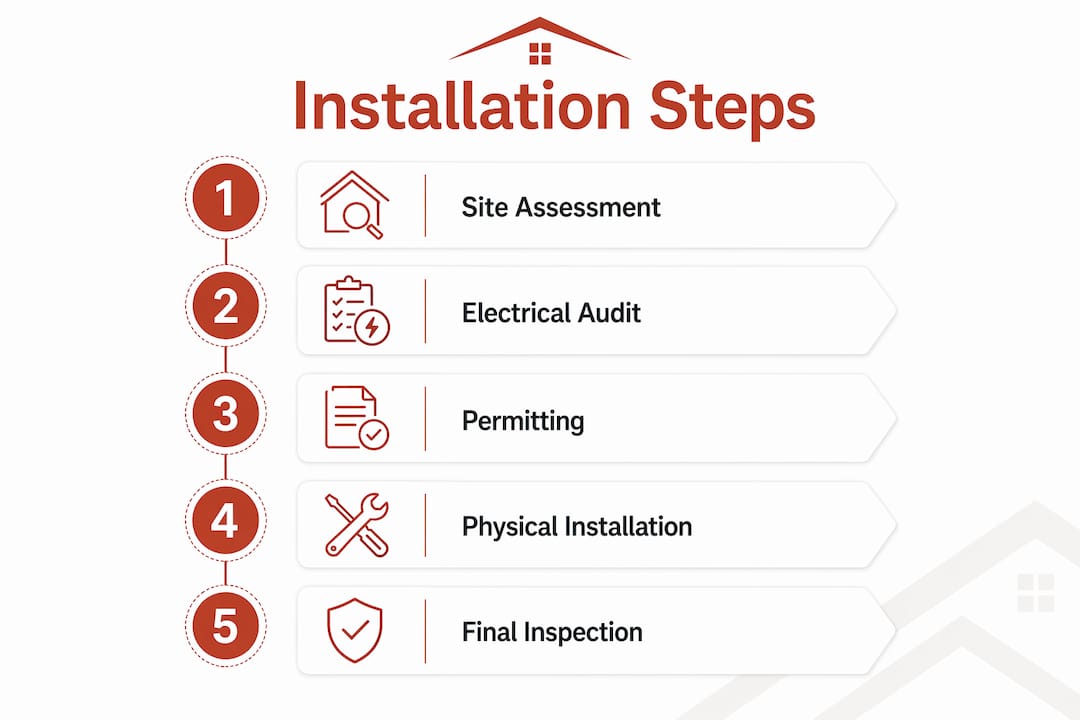
The process begins with a thorough site assessment. An engineer visits the property to evaluate roof or ground orientation, shading from trees or outbuildings, and the distance from the main switchboard to proposed panel locations. This visit also captures your daily energy consumption, which determines the system size.
Next comes an electrical audit of your existing switchboard and wiring. Rural switchboards often lack modern safety infrastructure, including residual current devices (RCDs), surge protectors, and proper earthing. Addressing these gaps before installation prevents costly delays and ensures the system meets current regulations. Skipping this step is the single most common cause of project overruns on rural properties.
Permitting and grid connection authorisation follow. If you are connecting to the National Grid, your installer submits a G98 or G99 application to your Distribution Network Operator (DNO). Off-grid systems bypass this step but still require building regulations sign-off in most cases.
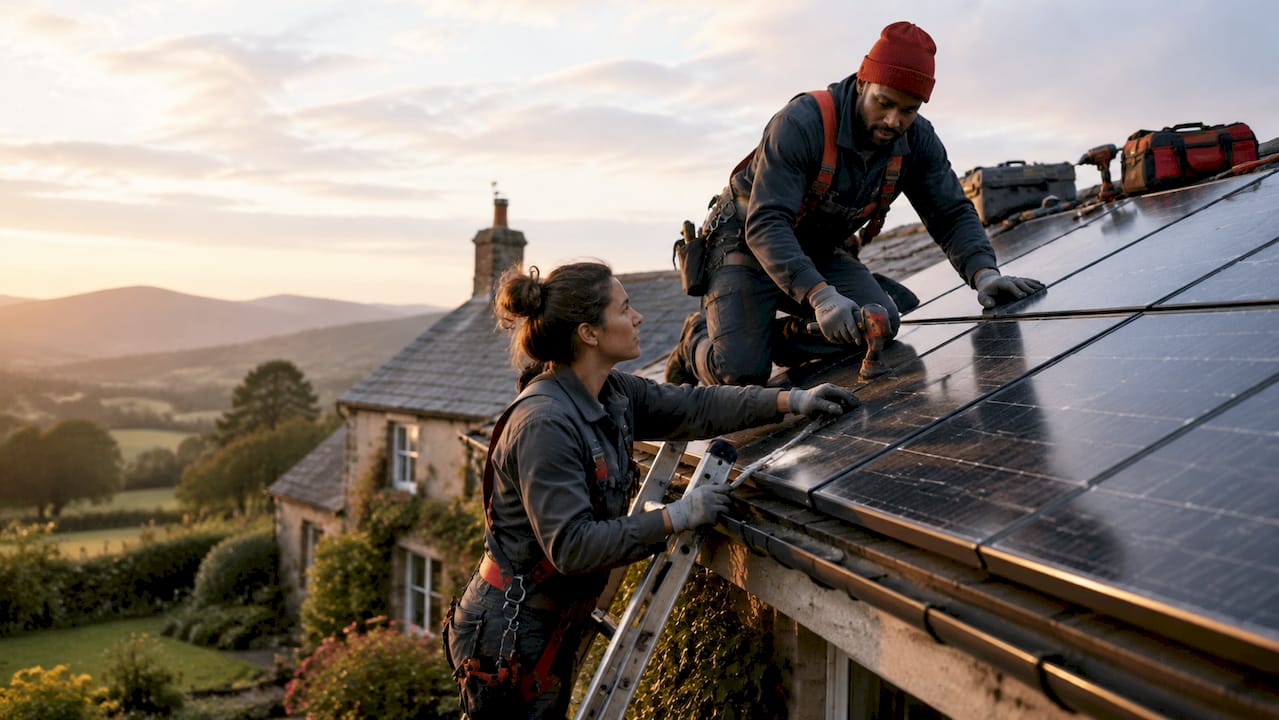
Physical installation typically takes 5–10 business days, with a further one to four weeks for final inspections and utility grid-connection permits. Panels are mounted, inverters are wired, batteries are integrated, and the system is tested under load before commissioning.
Pro Tip: Request your DNO application reference number before installation begins. Delays in grid connection approval are the most common cause of commissioning holdups on rural properties, and having the reference number lets you chase progress directly.
The table below summarises the typical timeline for each phase:
| Phase | Typical Duration |
|---|---|
| Site assessment and energy audit | 1–3 days |
| Electrical upgrades (if required) | 2–5 days |
| Permitting and DNO application | 2–6 weeks |
| Physical panel and inverter installation | 5–10 business days |
| Final inspection and commissioning | 1–4 weeks |
What components does a rural solar system need?
A rural solar energy system is built from four core components, each performing a distinct function. Understanding what each does helps you ask the right questions when comparing quotes.
- Photovoltaic panels convert sunlight directly into direct current (DC) electricity. Panel wattage is selected based on your daily consumption and local peak sun hours.
- Inverters convert DC electricity into alternating current (AC) for use in your home or farm buildings. Hybrid inverters also manage battery charging and grid export simultaneously.
- Charge controllers regulate the flow of electricity from panels to batteries, preventing overcharging and extending battery life.
- Battery banks store surplus generation for use after dark or during cloudy periods. Full-size rural homes typically require 10–12 kW systems paired with 20–25 kWh of battery storage as a baseline. That scale reflects the higher consumption of rural properties compared to urban homes.
Rural installations divide into three system types. Grid-tied systems export surplus electricity to the grid and draw from it when generation is low. Off-grid systems operate entirely independently, relying on battery storage and sometimes a backup generator. Hybrid systems combine both, offering grid connection with battery backup for resilience during outages.
Pro Tip: For farms with outbuildings, consider a sub-array on a south-facing barn roof rather than a single large roof array. Distributed generation reduces cable run lengths and can be sized independently for each building’s load.
A rural homestead consuming 3 kWh per day in a cloudy climate requires approximately 1,200–1,500W of panels. The same homestead in a sunnier location needs only 800–1,000W. This difference illustrates why system sizing must be location-specific, not based on generic online calculators.
What benefits can rural homeowners expect beyond bill savings?
The financial case for rural solar goes well beyond reduced electricity bills, though those savings are substantial. Some farm households report electricity bill reductions of up to 70% after installation. That figure reflects the high baseline consumption of rural properties, where pumps, outbuildings, and agricultural equipment run continuously.
The broader benefits include:
- Supplemental income: Solar installations offer farmers predictable ancillary revenue through land leases or royalties when larger arrays are developed on unused land. This income buffers against commodity market volatility, which is a genuine advantage for mixed-use farms.
- Energy resilience: Battery storage keeps critical systems running during grid outages. Solar-powered wells can cut water usage by 30% in arid climates, and battery backup supports temperature-controlled medical and food storage. For remote rural homes, this resilience is not a luxury.
- Local employment: Solar jobs grew by 6% in 2024, with rural counties accounting for over 50,000 positions nationwide. Beyond installation, rural solar creates lasting local roles in maintenance and monitoring.
- Agrivoltaics: Panels mounted above crops or grazing land allow simultaneous agricultural and energy production. This dual land use is gaining traction across the UK as land values rise.
“Solar installations are vital resilience tools in rural settings, protecting critical services such as water pumping and medical storage during outages.” — US Local Solar
The cost of solar in rural homes is typically recovered within 5–10 years through consistent energy savings. After that point, the system generates effectively free electricity for its remaining lifespan of 25 years or more.
How does seasonal weather affect rural solar performance?
Seasonal variation is the defining design challenge for rural solar systems, particularly off-grid installations. A system sized for summer output will fail to meet demand in December and january. The correct approach is to size panels based on winter peak sun hours rather than annual averages. This prevents power shortages in the months when you need heating, lighting, and pumping most.
The comparison below shows how climate affects panel requirements for the same daily load:
| Climate Type | Daily Load | Minimum Panel Wattage |
|---|---|---|
| Cloudy (e.g., northern UK) | 3 kWh/day | 1,200–1,500W |
| Moderate (e.g., southern England) | 3 kWh/day | 1,000–1,200W |
| Sunny (e.g., Mediterranean) | 3 kWh/day | 800–1,000W |
Battery sizing follows the same logic. An off-grid system should store enough energy for two to four days of autonomy to cover extended cloudy periods. Undersizing batteries is the most common reason rural off-grid systems fail their owners in winter.
Reducing energy loads is the highest-return action in off-grid solar design. Switching to LED lighting, efficient appliances, and solar thermal water heating reduces the panel and battery capacity you need to purchase. This is not a compromise. It is the most cost-effective way to build a reliable off-grid system.
Hybrid systems with a backup generator provide the most reliable solution for properties in high-latitude or heavily shaded locations. The generator runs only when battery reserves drop below a set threshold, which in practice means a few hours per year in a well-designed system. For more detail on winter solar performance, Smarthometechnical has published a dedicated guide covering design adaptations for UK conditions.
Pro Tip: When reviewing quotes, ask each installer to show you the winter-specific sizing calculation, not just the annual average. If they cannot produce it, their system is likely undersized for your coldest months.
Key takeaways
Rural solar installation delivers reliable, long-term electricity savings when systems are correctly sized for winter conditions, electrical infrastructure is audited before work begins, and battery storage is matched to days of autonomy rather than summer output.
| Point | Details |
|---|---|
| Size for winter, not summer | Base panel wattage on winter peak sun hours to avoid power shortages in low-sun months. |
| Audit electrics first | Upgrade RCDs, earthing, and surge protection before installation to prevent costly delays. |
| Battery storage is non-negotiable | Rural off-grid systems need 2–4 days of battery autonomy to cover extended cloudy periods. |
| Financial returns are strong | Bill reductions of up to 70% and cost recovery within 5–10 years are achievable for rural properties. |
| Hybrid systems offer the best resilience | Grid-tied systems with battery backup protect critical rural services during outages. |
What i have learned installing solar on rural properties
After years of working on rural solar projects across southern England with Smarthometechnical, the pattern I see most often is this: homeowners focus on panel count and price, and underestimate the electrical preparation work. The switchboard audit is not a formality. On older rural properties, it regularly uncovers wiring that would fail inspection the moment a solar inverter is connected. Catching that before installation day saves weeks of delay and hundreds of pounds.
The second thing I would tell any rural landowner is to take the hybrid battery option seriously. Grid outages in rural areas last longer than in towns. When your water pump, freezer, and heating all depend on electricity, a 20-minute outage becomes a genuine problem. A hybrid solar battery system changes that entirely. You stop noticing outages because the battery covers them automatically.
The financial case is stronger than most people expect. The combination of reduced bills, Smart Export Guarantee payments, and potential land lease income means rural solar often outperforms urban installations on return. If you are farming, the ability to run irrigation pumps and outbuilding lighting on solar-generated electricity is a direct reduction in operating costs, not just a household saving.
My advice: get the electrical audit done before you request quotes. You will have a clearer picture of total project cost, and you will not be surprised by upgrade costs mid-project.
— Simon
Ready to install solar on your rural property?
Smarthometechnical specialises in rural solar installations across southern England, from single-home off-grid systems to farm-scale arrays with battery storage. Every project starts with a full site assessment and electrical audit, so you know the complete cost before work begins.

Whether you are exploring a grid-tied system to cut bills or a fully off-grid setup for a remote property, Smarthometechnical designs systems sized for your actual winter consumption, not optimistic annual averages. Explore the solar panel installation guide for southern England, or contact the team directly to discuss your property’s requirements and available financing options.
FAQ
How long does rural solar installation take?
Physical installation takes 5–10 business days, with a further one to four weeks for final inspections and grid connection permits. Electrical upgrade work, if required, adds two to five days before installation begins.
Do rural solar systems work off-grid?
Yes. Off-grid systems use battery banks and charge controllers to store surplus generation for use at night or during cloudy periods. Full-size rural homes typically need a 10–12 kW system with 20–25 kWh of battery storage as a starting point.
What is the cost recovery period for rural solar?
System costs are generally recovered within 5–10 years through energy savings. After that, the system generates electricity at effectively no cost for the remainder of its 25-year-plus lifespan.
Why do rural solar systems need an electrical audit first?
Rural switchboards frequently lack RCDs, surge protectors, and correct earthing. These must be upgraded before a solar inverter can be safely connected, and identifying the work early prevents delays and unexpected costs mid-project.
Can solar panels power farm equipment and outbuildings?
Yes. Solar energy systems for farms are routinely sized to cover irrigation pumps, outbuilding lighting, and refrigeration. A hybrid inverter manages loads across multiple buildings, and battery storage keeps critical equipment running during grid outages.
Recommended
- Hybrid solar battery system hampshire: 2026 guide – Smart Home Technical Ltd
- What is a whole house solar system? 2026 guide – Smart Home Technical Ltd
- What is a commercial solar system? A 2026 guide – Smart Home Technical Ltd
- Solar panel installation explained for southern England – Smart Home Technical Ltd
