
Most domestic EICRs in the UK cost between £100 and £300, with an average commonly cited around £212, though your final price depends on property size, circuit count and region. The certificate itself only covers inspection and reporting; any faults found get quoted separately. Landlords in England must have this done at least every five years under Gov, so if your last certificate is close to expiry, the clock is already running.
TL;DR:
- Prices vary significantly based on property size, region, and circuit count, with London and the South East typically costing more than rural areas.
- Additional charges may include out-of-hours appointments, re-inspections after remedial work, and circuits with specialist equipment like EV chargers.
- The cost of remedial repairs can range from £50 for minor issues to over £6,000 for full rewires, depending on severity and property size.
- Landlords must ensure inspections are done at least every five years, with fees set by the market, not fixed by regulation.
- Always request a fixed, written quote before work and verify the electrician’s accreditation, insurance, and VAT status to avoid disputes.
Table of Contents
- EICR cost UK: prices by property size and region
- What actually changes your EICR quote
- Landlord duties: the five-year rule and who pays
- When the report finds faults: typical remedial costs
- Choosing an electrician: what to check before you book
- What to expect on the day, and how long it takes
- Notes on budgeting from Smart Home Technical Ltd
- A straight word on getting this right
- Get your EICR and any remedial work sorted properly
- Where these figures come from
- Sources
EICR cost UK: prices by property size and region
Smaller properties with fewer circuits sit at the cheaper end of the market, while larger properties such as five-bedroom houses or HMOs with multiple boards and outbuildings sit at the expensive end. Circuit count, not bedroom count, is what an electrician actually prices against, though the two tend to move together in most homes.
| Property type | Typical EICR cost |
|---|---|
| 1-bed flat | £100–£300 |
| 2 to 3-bed house | £150–£300 |
| 4-bed house | £100 to £300 |
| HMO or multi-occupancy | £250 upwards, per circuit basis |
| Commercial unit | Priced per circuit, varies by scale |
These ranges come from trade cost guides including MyBuilder’s price data and comparable industry tables. London and the South East typically sit at the top of every band, and regional labour rates and demand can add a significant premium above the national average. Rural Devon and Dorset properties, by contrast, often land closer to the lower end once you strip out travel time.
A few extras catch people out:
- Re-inspection after remedial work is usually a smaller fee, often £50 to £100 rather than a full retest.
- Out-of-hours or weekend appointments can add £20 to £80 on top of the standard quote.
- HMOs and large properties with several distribution boards get charged per circuit, so the total can climb quickly even in a modest-looking house.
What actually changes your EICR quote
Two similar-looking three-bed semis can get quotes £80 apart, and it’s rarely random. The number of circuits and distribution boards drives most of the variation. An old-style single consumer unit with six ways tests faster than a split-load board feeding an extension, a garage, and an EV charger.
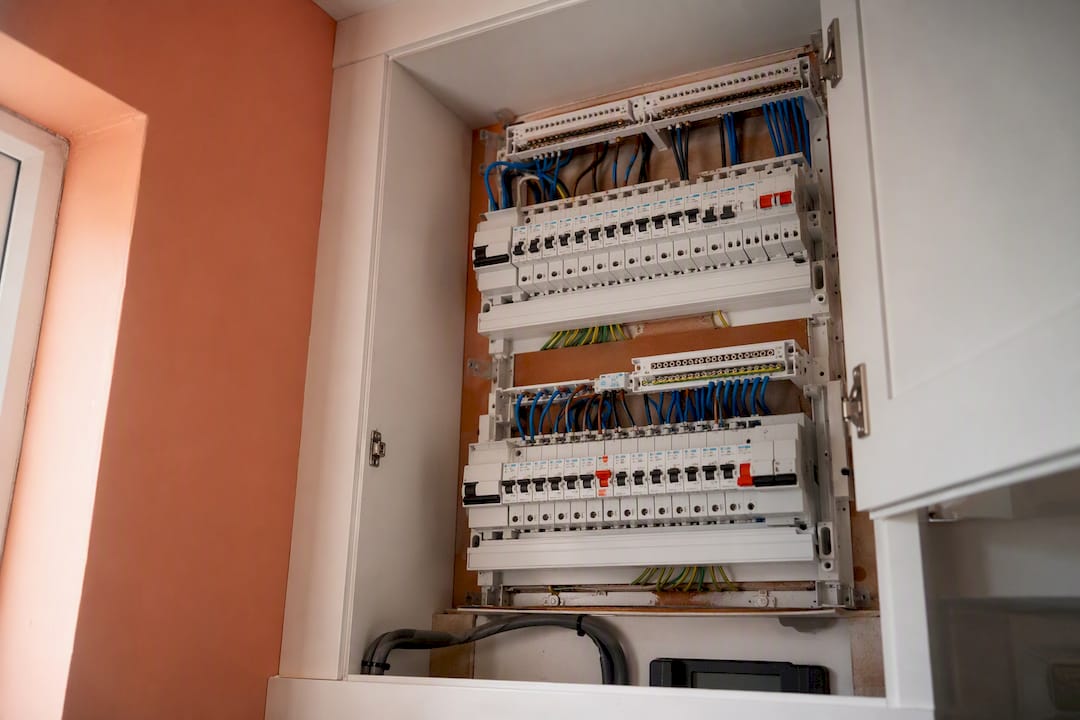
Access matters more than people expect. A boarded loft with easy hatch access adds minutes; a crawl space under a Victorian bay window adds an hour. Specialist circuits, particularly EV chargers and solar installations, need extra checks because they interact with the main installation in ways a standard socket circuit doesn’t. If your consumer unit was upgraded for solar, expect that to feature in the quote and possibly in the report itself.
Other factors worth asking about upfront:
- Travel time and fuel, particularly in rural parts of Hampshire and Dorset where the nearest accredited tester may be some distance away.
- VAT registration status, since a quote that looks cheap can jump once 20% VAT gets added.
- Whether the price includes a written report or just a verbal pass/fail.
Pro Tip: Ask for the quote in writing before booking, and check whether it states a fixed price for the inspection itself, separate from any remedial work. A vague verbal figure is where disputes start.
Landlord duties: the five-year rule and who pays
The Electrical Safety Standards in the Private Rented Sector Regulations 2020 require landlords in England to have installations inspected and tested at least every five years, and before a new tenancy starts if the existing certificate has lapsed. Nowhere in that regulation is a price fixed. The government sets the interval and the duty; the market sets the fee.
That distinction matters for enforcement. Local authorities can issue remedial notices and fines to landlords who skip the inspection or ignore an unsatisfactory result, regardless of the EICR cost.
Practical points for landlords:
- The landlord pays for the inspection, not the tenant, and the certificate must be given to existing tenants within 28 days of the test.
- Keep copies of every EICR and remedial invoice; enforcement checks look for a paper trail, not just a current certificate.
- A new tenancy needs a valid, in-date certificate before move-in, so don’t leave renewal until the last month of the five-year window.
When the report finds faults: typical remedial costs
An EICR grades issues using codes. C1 means danger present, needing immediate action. C2 means potentially dangerous, needing attention soon. FI means further investigation required. None of these are included in the inspection fee, and that’s the point where budgets often go sideways.
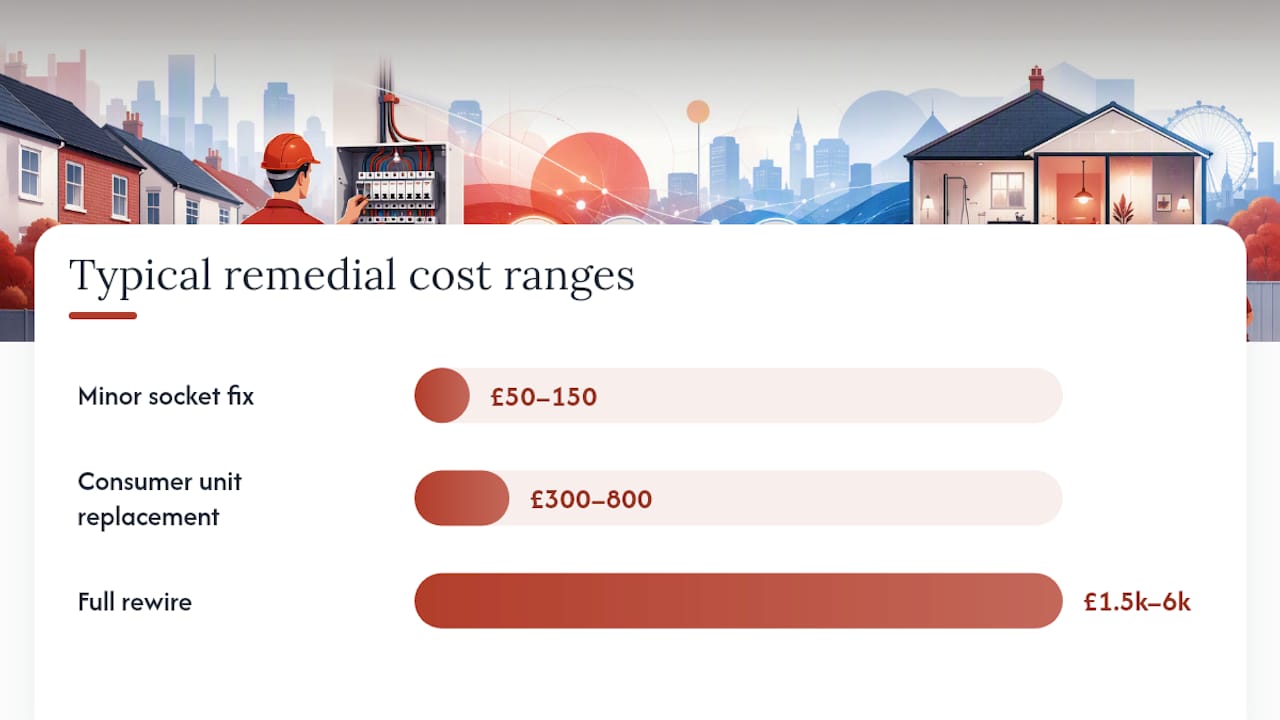
Remedial pricing varies hugely by scope: a single faulty socket or missing earth bond might be £50 to £150. A full consumer unit replacement, common where an old fuse board fails modern standards, typically runs £300 to £800. At the top end, full rewires cost £1,500 to £6,000 depending on property size, a figure worth reading in full if your report flags widespread wiring issues.
Ask for a fixed-price remedial quote once the report is issued, not an hourly estimate. Confirm whether VAT is included in that figure before you agree to anything.
Choosing an electrician: what to check before you book
- Ask for a fixed inspection fee, not an hourly rate. You want to know the total before the tester arrives, including what percentage of circuits will actually be sampled.
- Check accreditation. Look for NICEIC, NAPIT, or City & Guilds qualifications, and confirm the individual carrying out the test is the one named on any certification, not just the company.
- Confirm insurance and VAT status upfront. A registered, insured electrician should have no issue sharing this before booking.
- Watch for red flags. A quote well below the local range, pressure to sign off on remedial work on the spot, or an unwillingness to name a governing body are all worth walking away from.
Trade advisers consistently warn against choosing purely on lowest price, since a rushed inspection can miss genuine hazards or, just as often, generate unnecessary remedial quotes to justify the low fee.
Pro Tip: If a quote seems too cheap to be true for a full EICR, ask directly how many circuits will be tested and how long the inspection will take. A proper test on a family home rarely finishes in under an hour.
What to expect on the day, and how long it takes
The electrician arrives, checks access to the consumer unit, meter cupboard and any outbuildings, then begins testing each circuit for continuity, insulation resistance and earth fault protection. Faults get logged against the relevant code as they’re found, and you get a written report with a satisfactory or unsatisfactory outcome.
Timing varies by property. A small flat with one consumer unit might take an hour to ninety minutes. A three or four-bed family house typically runs two to three hours. HMOs and larger properties with multiple boards can take the best part of a day. Once remedial work is done, re-inspection is usually a shorter visit, often booked within a week or two of the repair being completed.
Notes on budgeting from Smart Home Technical Ltd
A fixed remedial quote issued after the inspection, rather than an open hourly rate, avoids most billing disputes we see. Solar-related consumer unit upgrades show up on EICRs more often than homeowners expect, particularly on older installations retrofitted before current wiring regulations. Budgeting for that possibility upfront saves a scramble later.
A straight word on getting this right
Cutting corners on an EICR to save £40 rarely pays off. The cheapest quote on the table is sometimes a proper inspection at a fair regional rate, and sometimes it’s a sampling job dressed up as a full test. Ask what’s actually being tested before you compare prices side by side. We work across Dorset, Hampshire and Devon, and transparent pricing with proper accreditation checks matters more than shaving a few pounds off the invoice.
— Simon
Get your EICR and any remedial work sorted properly
Smart Home Technical Ltd is a fully accredited electrical contractor covering Dorset, Hampshire and Devon, and EICR inspections sit alongside the remedial repairs, consumer unit upgrades and rewiring work that often follow one. That matters because you’re not left chasing a second contractor once a fault code lands on your report.

Working with one accredited team for both the inspection and the fix means a fixed remedial quote agreed before any work starts, not a running hourly bill. If your EICR flags a consumer unit issue tied to a solar installation, EV charger, or battery storage system, that’s territory we handle daily, not a specialist referral away. Get in touch through our electrical and solar services page to book an inspection or discuss remedial work off the back of a report you’ve already received.
Where these figures come from
Pricing ranges are drawn from MyBuilder’s cost guide and Checkatrade’s 2026 breakdown. Legal duties come from gov.uk’s landlord guidance and HSE’s testing guidance. For wider landlord obligations, see this energy efficiency regulations guide.
Sources
- Gov
- Electrical safety check costs: Price breakdown 2026 (Checkatrade)
- Electrical safety check cost – MyBuilder
- Testing guidance — HSE
