
Buying solar panels is defined as purchasing full ownership of a photovoltaic system, giving you all financial returns, while leasing means renting the system from a provider for a monthly fee with no ownership rights. For Devon homeowners weighing solar panel leasing vs buying Devon, the financial gap between the two options is significant over a typical 20-year horizon. A standard 3–4 kWp system, which suits most UK homes, can save up to £640 annually on electricity bills when owned outright. Leasing removes the upfront barrier but costs you both those savings and your Smart Export Guarantee (SEG) income. MCS certification is the UK quality standard that governs both routes, and any installer you use must hold it.
What are the financial differences between leasing and buying solar panels in Devon?
Buying solar panels in Devon requires an upfront investment, typically £5,000–£8,000 for a 3–4 kWp system. That figure sounds steep, but the returns are concrete and compounding.
Owners keep every penny of their electricity bill savings. The Energy Saving Trust puts that figure at up to £640 per year for a typical household. Over ten years, that is £6,400 back in your pocket before accounting for export income.

The Smart Export Guarantee (SEG) is a UK government scheme that pays you for surplus electricity you send back to the grid. Rates sit at roughly 5–6p per kWh, adding over £170 per year for a 4 kWp system. When you lease, the leasing company typically claims those SEG payments, not you. That is a detail most homeowners miss until they read the small print.
Leasing removes the upfront cost entirely. Monthly lease payments typically run £50–£100, covering installation and maintenance. Over a 20-year contract, that totals £12,000–£24,000 paid to the provider, often exceeding what you would have spent buying outright.
Pro Tip: Buying solar panels in Devon typically delivers a payback period of 8–12 years. After that, your electricity is effectively free. Lease contracts commonly run 20–25 years, meaning you pay throughout the period you could have been generating free power.
| Point | Buying | Leasing |
|---|---|---|
| Upfront cost | £5,000–£8,000 | None |
| Monthly payments | None (after purchase) | £50–£100 |
| Annual bill savings | Up to £640 | Reduced or nil |
| SEG income | Yours to keep | Usually goes to provider |
| Contract length | No contract | 20–25 years |
| Payback period | 8–12 years | No payback point |
How does leasing or buying solar panels affect property value in Devon?
Owned solar panels add measurable value to a Devon property. Estate agents treat them as a permanent fixture and an asset, particularly as energy costs remain high. Buyers actively seek homes with lower running costs, and a fully owned solar system delivers exactly that.
Leased systems tell a different story. Leased solar panels add no value to a property. The lease is a legal contract that must transfer to the new buyer, and many buyers refuse to accept that obligation. That reluctance can delay or derail a sale entirely.
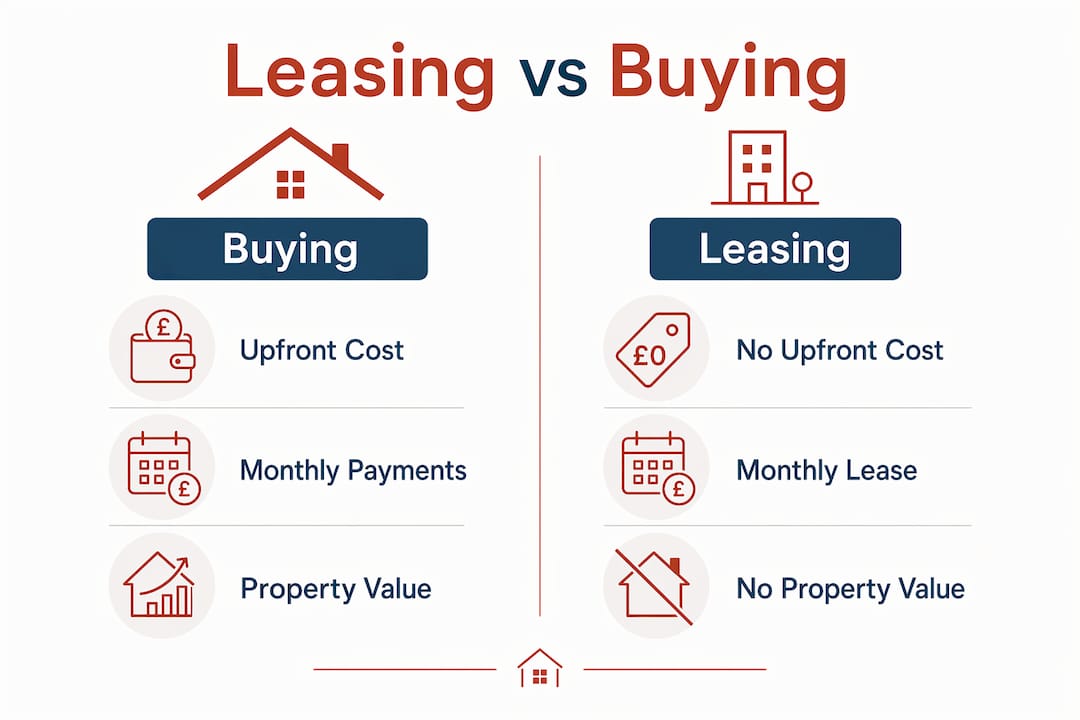
Lease contracts span 20–25 years and require the incoming buyer to take on the remaining term. Solicitors flag this during conveyancing, and mortgage lenders sometimes refuse to lend against properties with certain lease structures. The complication is real and worth factoring in before you sign.
Key points to weigh when thinking about resale:
- Owned panels are a property asset and typically increase sale appeal.
- Leased panels require legal transfer of the contract to any buyer.
- Buyers may negotiate a lower price or walk away due to lease obligations.
- Mortgage lenders can decline applications on properties with certain solar leases.
- The longer the remaining lease term at point of sale, the greater the complication.
Pro Tip: Before listing your home, speak to your estate agent about the solar system status. An MCS-certified owned system is a selling point. A lease with 15 years remaining is a conversation you want to prepare for in advance.
What are the installation prerequisites for buying or leasing solar panels in Devon?
MCS certification is non-negotiable for any solar installation in Devon. The Microgeneration Certification Scheme sets the quality standard for both equipment and installers across the UK. Without it, your system is ineligible for SEG payments and your warranty may be void. Whether you buy or lease, confirm your installer holds current MCS accreditation before any work begins. You can read more about the installation process for southern England to understand what a compliant installation involves.
Roof suitability is the first practical check. South-facing roofs with minimal shading and at least ten years of remaining life deliver the best output. East or west-facing roofs still generate usable power but at reduced efficiency. A roof in poor condition needs repair before panels go on, regardless of whether you are buying or leasing.
Devon’s climate is worth understanding. The county sits in one of the sunniest parts of the UK, which means solar generation profiles here are genuinely favourable. Coastal exposure and prevailing weather patterns do affect output, but Devon homeowners generally see strong performance from well-sited systems. For more on panel longevity in Devon, local conditions and maintenance both play a role.
| Factor | Buying | Leasing |
|---|---|---|
| MCS certification required | Yes | Yes |
| Maintenance responsibility | Homeowner | Provider |
| Warranty coverage | Manufacturer warranty | Provider covers |
| Roof condition check | Required | Required |
| System upgrade control | Full control | Provider decides |
| Insurance responsibility | Homeowner | Usually provider |
How do you decide whether to lease or buy solar panels in Devon?
The right choice depends on your financial position, how long you plan to stay in your home, and how much involvement you want in managing the system. Neither option suits every homeowner equally.
Buying makes the most financial sense if you plan to stay in your Devon home for more than ten years and have access to the upfront capital or a suitable loan. HMRC’s zero-rate VAT on energy-saving materials in Great Britain runs until 31 march 2027, currently removing £1,200–£1,800 from typical installation costs. That is a meaningful reduction that makes buying more accessible right now.
Leasing suits homeowners who cannot fund the upfront cost and want a hands-off arrangement. The provider handles maintenance, repairs, and system monitoring. Leasing appeals to those who want solar benefits without the management responsibility. The trade-off is lower financial return and a long-term contract that limits your flexibility.
Buying suits you if:
- You plan to stay in your home for ten or more years.
- You can fund the purchase outright or through a personal loan.
- You want to maximise long-term savings and SEG income.
- You intend to sell your home and want to protect its value.
- You want full control over system upgrades and battery storage additions.
Leasing suits you if:
- You cannot afford the upfront cost and do not want to take on debt.
- You prefer someone else to handle all maintenance and repairs.
- You are comfortable with a 20–25 year contract and its resale implications.
- You are not planning to sell your home within the contract period.
Pro Tip: Before committing to either route, get a professional assessment of your roof, your energy usage, and your household finances. Industry professionals agree that ownership delivers the best financial outcome for long-term residents, but the right answer is always personal.
Key takeaways
Buying solar panels in Devon delivers greater long-term financial returns than leasing, provided you have the upfront capital and plan to stay in your home beyond the 8–12 year payback period.
| Point | Details |
|---|---|
| Financial returns | Buying keeps all bill savings and SEG income; leasing surrenders most returns to the provider. |
| Property value | Owned panels add value at resale; leased panels complicate sales and deter buyers. |
| Upfront cost | Buying costs £5,000–£8,000 upfront; leasing has no upfront cost but monthly fees of £50–£100. |
| VAT relief | HMRC zero-rate VAT on solar installations runs until 31 march 2027, reducing buying costs. |
| MCS certification | Both routes require an MCS-accredited installer for SEG eligibility and warranty validity. |
What I have learned from advising Devon homeowners on solar
The most common mistake I see is homeowners choosing to lease because the zero upfront cost feels like the safe option. It rarely is. When you map out the numbers over 20 years, leasing almost always costs more than buying, and you end up with nothing to show for it at the end of the contract.
The SEG income point catches people off guard every time. Most homeowners assume that because the panels are on their roof, they receive the export payments. In a lease, that income goes straight to the provider. Over a 4 kWp system’s lifetime, that is a meaningful sum quietly leaving your household.
Property resale is the other area where leasing creates real problems. I have spoken to Devon homeowners who struggled to sell because buyers would not accept the lease transfer. One family had a sale fall through twice before they bought out the lease entirely. That is a stress and a cost that nobody plans for at the start.
My honest view is that buying is the right choice for the vast majority of Devon homeowners who plan to stay put. The VAT relief currently available makes the upfront cost lower than it has been in years. If capital is genuinely the barrier, a personal loan at current rates often still delivers a better outcome than a 25-year lease. Leasing has its place for a specific type of homeowner, but it is the exception, not the rule.
— Simon
Solar panel installation in Devon with Smarthometechnical
Smarthometechnical is a Devon-based electrical contractor specialising in renewable energy, including solar panel installation, battery storage, and EV charger installation. Every installation is carried out by MCS-accredited engineers, meaning your system qualifies for SEG payments from day one.
Whether you are ready to buy outright or want to talk through your options, Smarthometechnical provides personalised assessments based on your roof, your energy usage, and your budget. The team covers the full process from initial survey through to a completed, certified installation. Visit the solar installations page to request a quote or speak to an engineer about the right solar panel option for your Devon home.
FAQ
Is it better to lease or buy solar panels in Devon?
Buying solar panels in Devon delivers higher long-term returns, as you keep all bill savings and SEG income. Leasing suits homeowners who cannot fund the upfront cost and prefer a maintenance-free arrangement.
What is the Smart Export Guarantee (SEG)?
The Smart Export Guarantee is a UK government scheme that pays homeowners for surplus electricity exported to the grid, at rates of roughly 5–6p per kWh. Leasing contracts typically assign these payments to the provider rather than the homeowner.
Do leased solar panels affect selling my home?
Yes. Leased solar panels require the buyer to accept the remaining lease contract, which can deter purchasers and complicate mortgage applications. Owned panels are treated as a property asset and generally support the sale.
How long does it take to pay back the cost of buying solar panels?
The typical payback period for buying solar panels in the UK is 8–12 years, after which your electricity generation is effectively free. HMRC’s zero-rate VAT relief, running until 31 march 2027, reduces the initial cost further.
Does MCS certification matter for solar panels in Devon?
MCS certification is required for SEG eligibility and warranty validity on any solar installation in the UK. Always confirm your installer holds current MCS accreditation before work begins, whether you are buying or leasing.
Recommended
- Extending solar panel lifespan in Devon: 2026 guide – Smart Home Technical Ltd
- Solar panel installation explained for southern England – Smart Home Technical Ltd
- Hampshire new build solar options: 2026 guide – Smart Home Technical Ltd
- The role of solar in 2026 homes: a complete guide – Smart Home Technical Ltd
