
Solar panels are recyclable because their layered construction contains recoverable materials including glass, aluminium, silicon, copper, and silver, all of which can be separated through specialist processes. The recyclability of solar panels is not accidental. It stems directly from how panels are built, and from advances in mechanical, thermal, and chemical recycling methods that have matured significantly by 2026. Understanding why solar panels are recyclable matters for every homeowner investing in solar, because end-of-life management is part of the full environmental picture. Regulatory frameworks such as the UK’s WEEE (Waste Electrical and Electronic Equipment) regulations and bodies like IEA PVPS now shape how panels are collected, processed, and recovered.
Why solar panels are recyclable: materials and structure
Solar panels are recyclable primarily because of what they contain. Recycling processes recover glass, aluminium, silicon, copper, silver, and polymers from each module. These are not obscure materials. They are traded commodities with established markets, which makes recovery economically viable as well as environmentally worthwhile.
A standard crystalline silicon (c-Si) panel is built in distinct layers. The outer surface is tempered glass. Beneath that sits an EVA (ethylene vinyl acetate) encapsulant, then the silicon photovoltaic cells, another encapsulant layer, a polymer backsheet, and finally an aluminium frame. Each layer serves a specific function during the panel’s working life. Each layer also corresponds to a recoverable material stream at end of life.
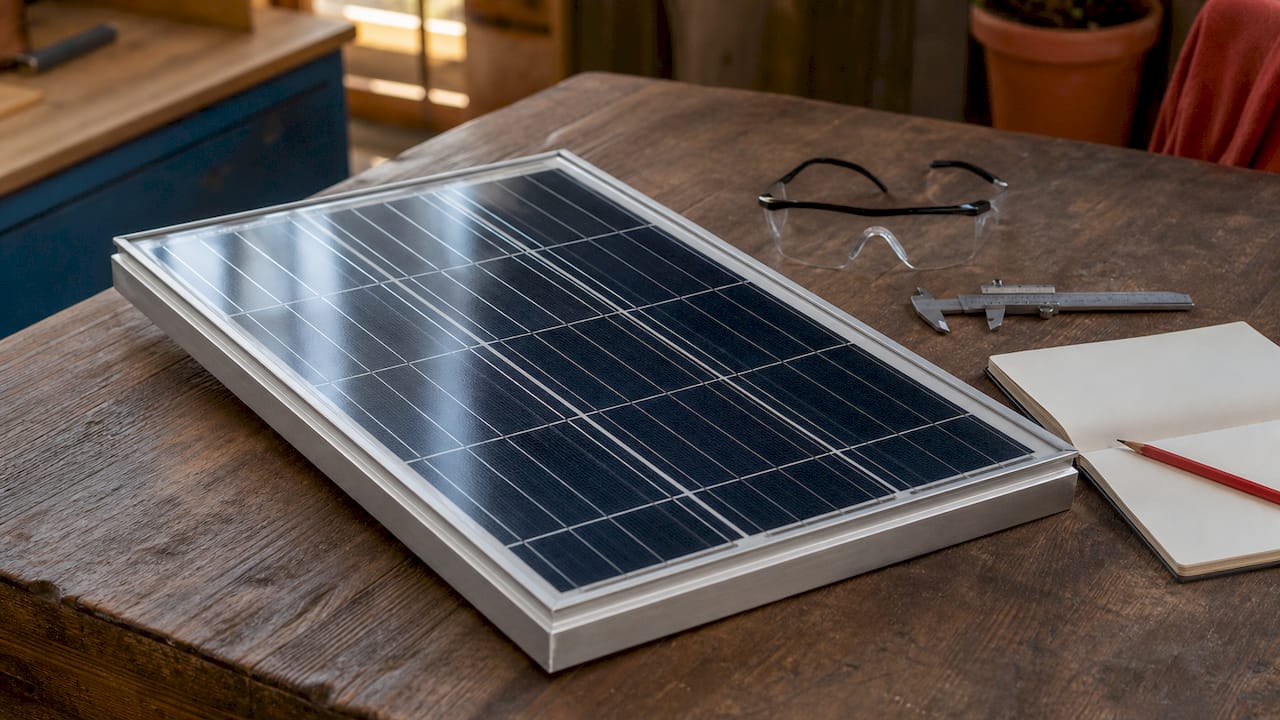
The aluminium frame and the glass are the easiest materials to recover. Both have well-established recycling infrastructure and ready buyers. Silicon, silver, and copper require more specialised treatment, but they carry higher economic value per kilogram, particularly silver, which is used in the conductive paste printed onto each cell.
Pro Tip: If you are planning a solar installation now, ask your installer about their end-of-life take-back arrangements. Responsible installers, including Smarthometechnical, can point you to authorised recycling routes before your panels ever reach that stage.
How does solar panel recycling work?
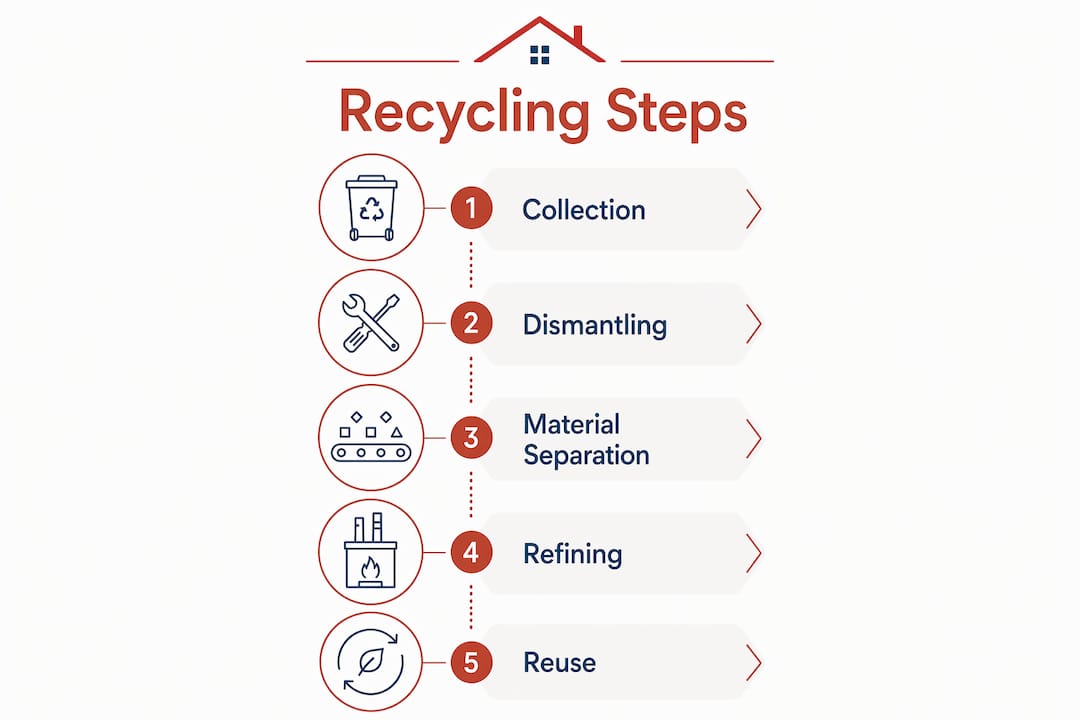
Recycling solar panels follows a multi-step process designed to separate each material layer without destroying its quality. The method chosen depends on the panel type, its age, and the target recovery materials.
Mechanical recycling
Mechanical recycling is the most widely used method for c-Si modules. Panels are dismantled, frames removed, and junction boxes detached. The remaining laminate is then shredded or crushed. This produces a mixed stream of glass, silicon, and polymer fragments that are further sorted. Mechanical recycling is scalable and cost-effective, which is why the IEA PVPS 2026 update identifies it as the dominant commercial approach. The trade-off is that shredding can reduce glass and silicon purity compared to gentler methods.
Thermal and chemical methods
Thermal recycling applies controlled heat to burn off the EVA encapsulant. This releases the glass and silicon cells in better condition than mechanical shredding alone. Chemical leaching then dissolves and separates metals such as silver and copper at high purity. The combination of thermal and chemical steps yields the cleanest material streams, though it requires more energy and specialist equipment.
Emerging laser delamination
Laser-based delamination is an emerging technique that uses precision laser energy to separate laminated layers without heat damage or chemical exposure. It is not yet at commercial scale, but research supported by the IEA PVPS Task 12 programme shows it can preserve silicon wafer quality better than any current method.
The table below compares the three main recycling approaches:
| Method | Key Advantage | Main Limitation |
|---|---|---|
| Mechanical | Scalable, low cost | Lower material purity |
| Thermal and chemical | High purity glass and metals | Higher energy use, specialist plant needed |
| Laser delamination | Best silicon preservation | Not yet at commercial scale |
The hardest step in any method is delaminating the laminated glass, cell, and polymer stack without damaging the materials inside. That challenge drives the complexity and cost of the entire recycling chain.
How panel design affects recyclability
Solar panel design directly determines how straightforward recycling will be. The laminated structure that makes panels durable and weatherproof for 25 to 30 years is the same structure that makes separation technically demanding. Recyclers must work with, not against, that construction.
Recyclers sort panels by type, vintage, and condition before processing begins. A panel from 2005 uses different encapsulant chemistry than one from 2022. Sorting allows recyclers to tailor process parameters, temperature, chemical concentration, and shredder settings, to each batch. This step is not optional. Skipping it reduces recovery yields and material purity.
High recovery purity matters because the circular economy benefit of recycling depends on recovered materials substituting for virgin equivalents. Recovered silicon that is too contaminated to re-enter cell manufacturing has far lower value than high-grade reclaimed silicon. Advanced recycling integrates mechanical, thermal, chemical, and laser technologies specifically to hit the purity thresholds that make recovered materials genuinely useful.
The design decisions made by panel manufacturers also affect recyclability. Thinner backsheets, lower-adhesion encapsulants, and modular frame designs all make end-of-life processing easier. Some manufacturers are now working with recyclers at the design stage, a practice known as design for recyclability, to reduce future processing costs and improve material yields.
What are the environmental benefits of recycling solar panels?
Recycling solar panels delivers measurable environmental gains that go well beyond simply keeping waste out of landfill. Recycling can reduce global warming potential by up to 393% compared to landfill disposal, according to 2026 life cycle assessment studies. That figure reflects the combined benefit of avoiding landfill emissions and displacing the carbon cost of mining and refining virgin materials.
Aluminium smelting is one of the most energy-intensive industrial processes in the world. Recovering aluminium from panel frames instead of smelting virgin ore cuts that energy demand significantly. Silver mining carries its own environmental footprint. Recovering silver from cell contacts through chemical leaching avoids that extraction entirely.
Pro Tip: When comparing solar panel brands, check whether the manufacturer is registered with an approved WEEE producer compliance scheme. This tells you they have a funded end-of-life plan, not just a marketing claim.
The table below summarises the key environmental and economic recovery outcomes:
| Material | Recovery Method | Environmental Benefit |
|---|---|---|
| Aluminium frame | Mechanical dismantling | Avoids energy-intensive primary smelting |
| Tempered glass | Mechanical or thermal | Reduces quarrying and glass production emissions |
| Silicon cells | Thermal and chemical | Displaces high-energy silicon refining |
| Silver contacts | Chemical leaching | Avoids environmentally damaging silver mining |
| Copper wiring | Mechanical sorting | Reduces open-cast copper mining demand |
Lifecycle studies confirm that these benefits are only realised when recovery rates and purity thresholds are actually met. Low-quality recycling, where materials are recovered but too contaminated to substitute for virgin inputs, can reduce or even eliminate the climate advantage. This is why the quality of the recycling process matters as much as the act of recycling itself.
How are solar panels disposed of legally in the UK?
Solar panels are classified as WEEE electrical waste in the UK and EU. UK and EU regulations mandate that panels must be collected and recycled through authorised routes rather than sent to general landfill. This is not a voluntary standard. It is a legal requirement.
As a homeowner, you have several practical options for compliant disposal:
- Contact your original installer. Most registered installers are obligated to arrange or signpost authorised collection. Smarthometechnical, for example, advises customers on approved end-of-life routes at the point of installation.
- Use a manufacturer take-back scheme. Many panel manufacturers operate or fund producer compliance schemes under WEEE regulations.
- Contact an authorised WEEE recycling centre. These facilities are licensed to handle solar panels and will process them through approved methods.
- Never place panels in general waste or skip hire. Doing so is illegal and risks releasing hazardous materials, including lead solder and cadmium traces in some older panel types, into the environment.
The current infrastructure challenge is that recycling capacity has not yet caught up with the volume of panels approaching end of life. The first large wave of UK residential installations from the early 2010s Feed-in Tariff period will reach the 25-year mark in the mid-2030s. That creates a significant near-term demand for recycling facilities, and investment in capacity is accelerating in response.
What advances are improving solar panel recycling?
The IEA PVPS 2026 report documents higher recovery rates, improved material yields, and greater output purity across commercial recycling operations compared to earlier assessments. These gains come from better process control, improved sorting technology, and more refined chemical treatments.
Several developments are worth watching:
- Laser delamination is moving from laboratory to pilot scale, with the potential to recover silicon wafers intact rather than as fragments.
- Digital sorting systems use spectroscopic analysis to identify panel types automatically, reducing manual sorting time and error.
- Closed-loop chemical processes recycle the leaching agents used in metal recovery, cutting both cost and chemical waste.
- Policy-driven investment in the UK and EU is funding new recycling facilities specifically designed for the anticipated volume increase from residential installations.
Lifecycle greenhouse gas reductions from proper recycling of silicon wafers and panel components are substantial. Realising those reductions at scale requires both the technology and the infrastructure to handle millions of panels per year. The trajectory in 2026 is positive, but the work is not finished.
Key takeaways
Solar panels are recyclable because their layered construction of glass, aluminium, silicon, and metals can be separated through mechanical, thermal, and chemical processes, delivering verified environmental and economic benefits when done to a high standard.
| Point | Details |
|---|---|
| Recyclable by design | Solar panels contain glass, aluminium, silicon, silver, and copper, all recoverable through specialist processes. |
| Process choice matters | Mechanical recycling dominates commercially; thermal and chemical methods deliver higher purity for valuable materials. |
| Environmental gains are real | Recycling can reduce global warming potential by up to 393% versus landfill, but only when recovery quality thresholds are met. |
| Legal obligation in the UK | Solar panels are WEEE waste; homeowners must use authorised recycling routes, not general waste disposal. |
| Technology is improving | IEA PVPS 2026 data shows rising recovery rates and purity, with laser delamination and digital sorting advancing rapidly. |
The part most homeowners miss about solar recycling
I have spoken with hundreds of homeowners about solar over the years, and the recycling question almost never comes up at the point of purchase. People focus on payback periods, feed-in tariffs, and roof orientation. That is entirely reasonable. But the environmental case for solar is only complete if the panels are properly recycled at end of life.
What concerns me is the assumption that recycling is automatic or that all recycling is equivalent. It is not. Recovery quality thresholds determine whether recycled silicon actually displaces virgin production or simply ends up as low-grade aggregate. The difference between those two outcomes is enormous in climate terms.
My honest view is that homeowners who care about sustainability should ask their installer one simple question before signing anything: what happens to these panels in 25 years? If the answer is vague, that tells you something. The environmental benefits of solar are genuine and significant, but they depend on the full lifecycle being managed responsibly, not just the generation phase.
The good news is that the regulatory framework is tightening, recycling technology is improving, and the industry is taking end-of-life management more seriously than it did a decade ago. That progress deserves recognition. So does the remaining gap between current capacity and the volume of panels that will need processing in the 2030s.
— Simon
Plan your solar installation with end-of-life in mind
Choosing solar is one of the most effective steps a homeowner can take for long-term energy sustainability. The full environmental benefit includes what happens when panels eventually reach end of life, and that starts with choosing the right installer from day one.

Smarthometechnical specialises in solar panel installation across southern England, with expertise in renewable energy systems including battery storage and EV charger installation. Every installation we carry out includes guidance on authorised recycling routes and WEEE compliance, so you are covered for the full lifecycle of your system. If you are considering solar and want straightforward advice from a team that understands both the technology and the regulations, get in touch with Smarthometechnical today.
FAQ
Can solar panels be fully recycled?
Solar panels can be recycled to a high degree, with glass, aluminium, silicon, copper, and silver all recoverable through specialist recycling processes. Recovery rates and material purity vary by method, with thermal and chemical combinations achieving the highest quality outputs.
How are solar panels disposed of in the UK?
Solar panels are classified as WEEE electrical waste in the UK, meaning they must be collected and processed through authorised recycling routes. Homeowners should contact their installer, the panel manufacturer, or a licensed WEEE recycling centre rather than disposing of panels in general waste.
What materials are recovered from recycled solar panels?
Recycling recovers aluminium frames, tempered glass, silicon cells, silver contacts, and copper wiring from solar panels. Aluminium and glass are the easiest to recover, while silicon and silver require more specialised thermal or chemical treatment.
Does recycling solar panels actually help the environment?
Yes. Life cycle assessment studies show recycling can reduce global warming potential by up to 393% compared to landfill disposal. The benefit depends on achieving sufficient recovery quality so that reclaimed materials genuinely substitute for virgin equivalents.
How long do solar panels last before they need recycling?
Most solar panels carry a 25 to 30 year performance warranty and reach end of life around that point. Panels can sometimes be reused or repurposed before full recycling is required, particularly if they retain reasonable output efficiency.
Recommended
- Why switch to solar energy: a 2026 homeowner’s guide – Smart Home Technical Ltd
- Solar panel benefits for coastal homes in 2026 – Smart Home Technical Ltd
- Extending solar panel lifespan in Devon: 2026 guide – Smart Home Technical Ltd
- What is a commercial solar system? A 2026 guide – Smart Home Technical Ltd
