
A whole house solar system is a complete solar power installation designed to generate and store enough electricity to meet all the energy demands of a home, including lighting, HVAC, and major appliances. Unlike a partial solar setup that offsets a portion of your bill, a whole house system, known in the industry as a solar-plus-storage system, is sized to cover your full load. Smarthometechnical installs these systems for homeowners and property investors who want genuine energy independence, not just a modest reduction in their electricity bill. The difference between the two approaches is significant, both in cost and in what you actually get during a power cut.
What is a whole house solar system and how does it work?
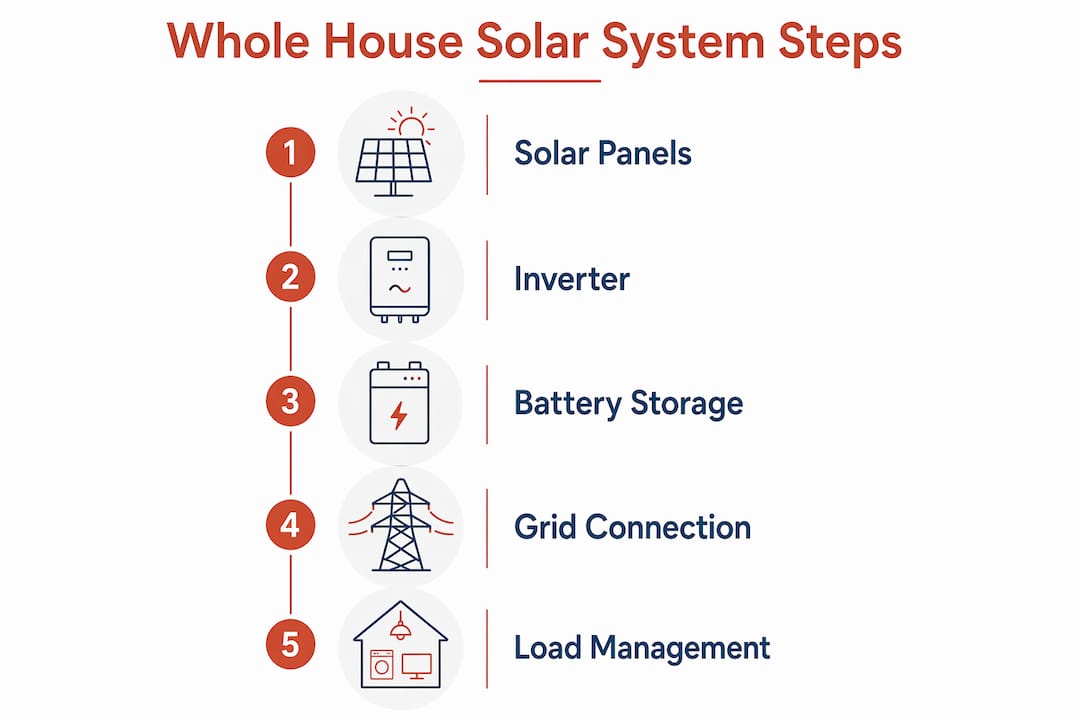
A whole house solar system combines solar panels, battery storage, an inverter, and a grid connection or transfer switch into one integrated energy solution. Each component has a specific job, and the system only performs reliably when all parts are correctly sized and matched to your household load.
Solar panels sit on your roof and convert sunlight into direct current (DC) electricity. The number of panels you need depends on your annual consumption and the orientation of your roof. A typical UK home with high energy use may require 12 to 20 panels to generate sufficient output across the year.
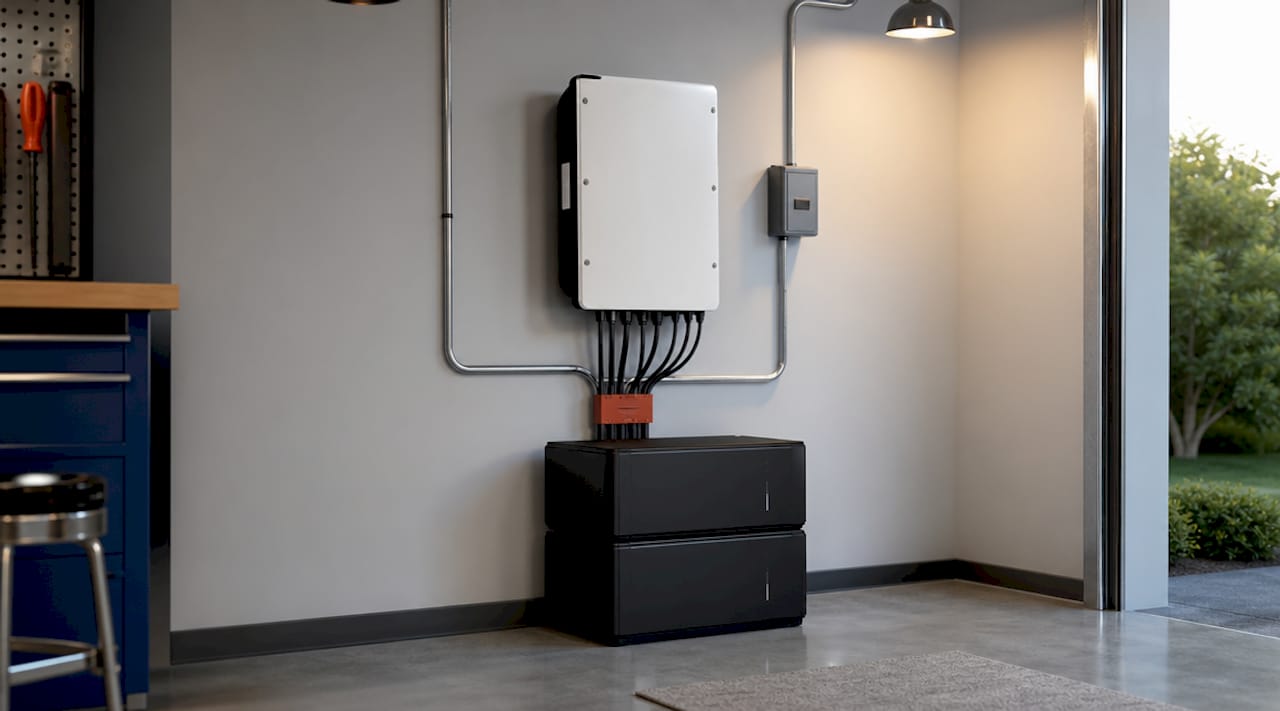
The inverter converts DC electricity from the panels into alternating current (AC), which is what your appliances actually use. For a whole house system with battery storage, a hybrid inverter handles both the solar input and the battery charge and discharge cycle simultaneously.
Battery storage is what separates a true whole house solar system from a basic grid-tied setup. Grid-tied solar systems offset your annual electricity use but shut down during blackouts without battery backup. Adding batteries means your home keeps running when the grid goes down. A typical home needs 20 to 40 kWh of battery capacity and an 8 to 12 kW inverter for reliable whole-home backup. That is not one battery unit. Achieving that capacity means stacking two to four battery units, such as the Tesla Powerwall 3 or the GivEnergy All-in-One, in a bank.
The automatic transfer switch detects a grid outage and switches your home to battery power within milliseconds. Without it, your solar system cannot legally or safely operate in isolation from the grid.
- Solar panels generate DC electricity from sunlight
- Hybrid inverter converts DC to AC and manages battery charging
- Battery bank stores surplus energy for use at night or during outages
- Automatic transfer switch isolates the home from the grid during a blackout
- Smart monitoring systems track generation, consumption, and battery state in real time
Pro Tip: When sizing your battery bank, account for your HVAC system specifically. An air conditioning unit requires 3 to 5 kW of running power and a startup surge of 5 to 8 kW, which can trip an undersized inverter the moment the compressor kicks in.
What are the benefits of a whole house solar system?
The whole house solar benefits go well beyond a lower electricity bill, though that alone is a compelling reason to act. Solar-plus-storage systems provide backup power regardless of weather or time of day, which changes the risk profile of your home entirely.
“63% of households could achieve blackout resilience covering about half their electricity needs during grid failures if implemented in time.” — Stanford Energy
That figure points to something most homeowners overlook. The value of solar is not just financial. It is operational. A home that stays powered during a multi-day outage is a fundamentally different asset to one that goes dark.
Here are the core benefits broken down:
- Bill reduction. Households can reduce electricity costs by 15% on average with solar-plus-storage. In areas with high utility rates, savings compound faster.
- Increased home value. Solar installations increase home value in the same way a renovated kitchen or finished basement does. Owned systems attract a premium from buyers. Leased or third-party owned systems have a neutral or occasionally positive impact, but they do not command the same premium.
- Energy independence. You are no longer entirely dependent on the grid or exposed to rising tariff rates.
- Carbon footprint reduction. A whole house solar system eliminates a significant portion of your home’s reliance on fossil-fuel-generated electricity.
- Outage resilience. With a properly sized battery bank, your home runs normally during a blackout. Lights, refrigerator, internet, and HVAC all continue without interruption.
For property investors, the solar installation as a home upgrade argument is particularly strong. Tenants increasingly factor energy costs into rental decisions, and a solar-equipped property commands both higher rents and lower void periods in energy-conscious markets.
What does a whole house solar system cost in 2026?
The cost of whole house solar is the question most homeowners ask first, and the honest answer is that it depends on system size, battery capacity, and installation complexity. Whole-home solar-plus-battery backup systems cost between £20,000 and £40,000 before any available incentives or tax credits. That range reflects real variation, not vague estimates.
| Cost factor | Typical impact |
|---|---|
| Number of solar panels | More panels increase generation capacity and upfront cost |
| Battery bank size | Each additional battery unit adds £2,000 to £5,000 to the total |
| Inverter specification | Hybrid inverters cost more than standard string inverters |
| Roof complexity | Complex rooflines increase installation labour costs |
| Local incentives | UK Smart Export Guarantee and VAT exemptions reduce net cost |
The economic viability of whole house solar is directly influenced by your local utility rates and how frequently your area experiences power outages. If your electricity tariff is high and your area suffers regular outages, the return on investment accelerates considerably.
Maintenance costs are low. Solar panels have no moving parts and typically carry a 25-year performance warranty. Inverters usually carry a 10-year warranty and may need replacing once over the system’s lifetime. Battery units carry warranties of 10 years in most cases, with capacity guarantees of around 70% at end of warranty.
Pro Tip: Always request a full system quote that itemises panels, batteries, inverter, mounting hardware, and installation separately. Bundled quotes make it difficult to compare providers or identify where costs can be adjusted.
How to plan and install a whole house solar system
Planning a solar system for home use is where most projects either succeed or stall. The technical decisions made at this stage determine whether your system actually delivers whole-home backup or simply reduces your bill modestly.
-
Audit your energy consumption. Pull 12 months of electricity bills and identify your peak daily usage in kilowatt-hours. This figure drives every sizing decision that follows.
-
Choose your system type. Grid-tied systems are the lowest cost option but offer no outage protection. Solar-plus-storage systems add battery backup and are the standard choice for whole-home resilience. Off-grid systems remove the grid connection entirely and require significantly larger battery banks and careful load management.
-
Size your battery bank correctly. Most homeowners underestimate large appliance power during outages. 30 to 40 kWh of storage is needed to cover HVAC and heavy loads during a blackout. A single 8.9 kWh battery covers lights and essentials for 8 to 12 hours, nothing more.
-
Select a qualified installer. Solar installations require MCS certification in the UK. An MCS-certified installer is a prerequisite for accessing the Smart Export Guarantee and for most manufacturer warranties to remain valid.
-
Obtain the necessary permits. Most domestic solar installations in the UK fall under permitted development rights, but battery storage systems above certain sizes may require planning permission. Your installer should handle this.
-
Understand your warranty and lifespan expectations. A well-installed system should operate for 25 to 30 years. Panels degrade at roughly 0.5% per year in output. Batteries and inverters have shorter replacement cycles, which should be factored into your long-term cost model.
-
Avoid common pitfalls. Do not size your system based on summer generation alone. UK winters produce significantly less solar output, and your battery bank must be large enough to bridge low-generation periods.
The home automation integration available through Smarthometechnical allows your solar system to work alongside smart energy management, scheduling high-consumption appliances to run when generation is at its peak.
Key takeaways
A whole house solar system only delivers genuine energy independence when battery capacity, inverter sizing, and load management are matched precisely to your household’s actual consumption.
| Point | Details |
|---|---|
| System definition | A whole house solar system combines panels, batteries, and an inverter to power all home loads. |
| Battery sizing matters | Whole-home backup requires 20 to 40 kWh of storage, typically two to four battery units stacked. |
| Cost range in 2026 | Expect to invest between £20,000 and £40,000 before incentives for a full solar-plus-storage system. |
| Home value uplift | Owned solar installations increase property value; leased systems do not command the same premium. |
| Professional installation | MCS certification is required in the UK to access the Smart Export Guarantee and validate warranties. |
Why most solar quotes miss the point entirely
I have surveyed a lot of solar installations over the years, and the single most common failure I see is not technical. It is a mismatch between what the homeowner thought they were buying and what the system actually delivers. A grid-tied system with no battery storage will not keep your lights on during a power cut. That sounds obvious, but a surprising number of homeowners discover this the hard way.
The second misconception is around battery sizing. People hear “battery backup” and assume one unit is sufficient. It is not, unless you are happy running a handful of lights and your fridge for half a day. Genuine whole-home backup, the kind that keeps your HVAC running through a two-day outage, requires a properly stacked battery bank sized to your actual load. That costs more upfront, but it is the only version of the product that does what most people expect solar to do.
My advice to property investors is straightforward. Buy the system, do not lease it. The home value premium from an owned solar-plus-storage system is real and measurable. A leased system transfers that value to the leasing company and can actually complicate a property sale.
Battery technology is improving quickly. The systems available in 2026 offer better energy density and longer cycle life than those installed five years ago. If you have been waiting for the technology to mature, it has. The question now is whether your installer is sizing and specifying systems correctly, not whether the technology works.
— Simon
Ready to get a whole house solar system installed?
Smarthometechnical specialises in the full design and installation of solar-plus-storage systems for homeowners and property investors across the UK. From your initial energy audit through to commissioning and handover, the team handles every stage of the process.

Whether you are looking to achieve full energy independence, protect your home against outages, or increase your property’s value, Smarthometechnical designs systems built around your actual load requirements. Every installation is carried out by MCS-certified engineers, ensuring you qualify for the Smart Export Guarantee and all applicable manufacturer warranties. Visit the solar installations page to explore your options or book a consultation.
FAQ
What is the difference between grid-tied and solar-plus-storage?
A grid-tied system offsets your electricity bill but shuts down during a power cut. A solar-plus-storage system adds battery backup, keeping your home powered when the grid fails.
How many batteries do I need for whole-home backup?
Most homes require two to four battery units to achieve 20 to 40 kWh of storage, which is the minimum needed to run HVAC and major appliances through a multi-day outage.
Does a whole house solar system increase property value?
Yes. Owned solar installations are viewed by buyers similarly to major home upgrades and attract a measurable price premium. Leased systems do not carry the same benefit.
How long does a whole house solar system last?
Solar panels carry 25-year performance warranties and degrade at roughly 0.5% per year. Inverters typically last 10 to 15 years, and battery units carry 10-year warranties with around 70% capacity retention at end of term.
Is planning permission required for solar installation in the UK?
Most domestic solar panel installations fall under permitted development rights and do not require planning permission. Battery storage systems above certain sizes may require approval, and your MCS-certified installer should confirm this before work begins.
